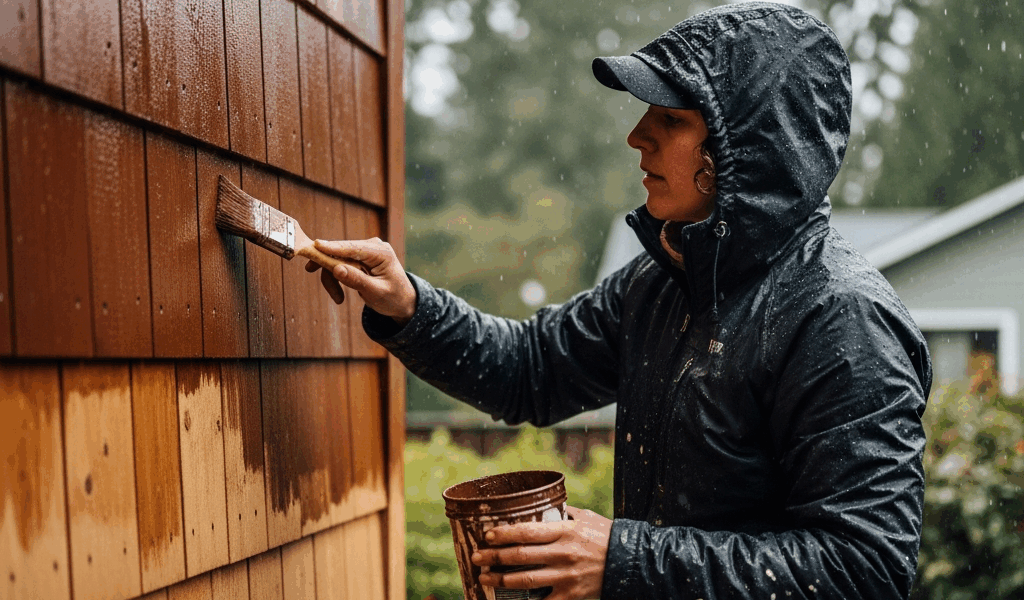
You have layered latex paint on wood trim that you need to remove without destroying the molding profiles underneath. A heat gun will scorch the details. Aggressive sanding rounds the edges. The right stripper for wood trim is a gel formula that sits where you apply it, softens multiple coats overnight, and lifts without raising the grain. Here is what works.
Why Wood Trim Stripping Is Different
Stripping paint from wood trim and molding is not the same job as stripping a wall or a metal surface. Over-aggressive stripping raises wood grain, damages routed profiles and corbel details, and can cause swelling that changes the fit of trim pieces against the wall. Latex paint on wood trim also typically involves multiple layered coats applied over decades — each coat bonded to the one below it.
The wrong approach destroys the trim. The right approach uses chemistry instead of force.
Best Latex Paint Stripper for Wood Trim
Citristrip (Orange Gel). The standard recommendation for wood trim. Works overnight with low fumes, safe for wood, and does not raise grain as aggressively as solvent-based strippers. Apply a thick coat, cover with plastic sheeting, and let it work for 12 to 24 hours. Available at Home Depot and Lowes. For the most common use case — removing layered latex from routed or detailed wood trim — this is the product to start with.
Smart Strip. Water-based, safe for wood profiles. Slightly longer dwell time than Citristrip but gentle on softwood trim. Good for delicate profiles where grain protection is the top priority.
Dumond Chemicals Smart Strip Pro. For heavily layered paint — 5 or more coats. The Pro formula has more stripping power for thick buildup without the aggression of methylene chloride strippers. Apply thick, cover with the included laminated paper, and allow 24 or more hours for maximum penetration.
How to Apply Stripper to Detailed Trim
Gel strippers are the right choice for trim work — they stay where you apply them and do not drip onto adjacent surfaces or flooring. Use a natural bristle brush to work the gel into carved or routed details. Get it into every groove and profile.
For vertical surfaces — door casing, window trim, crown molding — wrap the stripper-coated surface with plastic sheeting to extend dwell time and prevent the gel from drying out before it finishes working. Plastic cling wrap pressed directly over the gel keeps it wet and active for 24 hours.
Use a plastic scraper to remove softened paint — not metal. Metal gouges softwood trim profiles. A plastic putty knife or a nylon scrub pad reaches into grooves without scoring the wood surface. For tight details, use a stiff-bristle toothbrush or a brass-bristle brush.
After Stripping: Neutralizing and Prep for Repainting
After chemical stripping, neutralize the residue before repainting. For water-based strippers: rinse with clean water and let dry fully — 24 hours or more for absorbent softwood. Sand lightly with 120 to 150 grit to smooth any raised grain. Do not skip this step — raised grain under new paint creates a rough, unprofessional finish.
Prime bare wood before painting. Oil-based primer provides the best adhesion on previously painted and stripped surfaces. Skipping primer is the most common mistake after stripping — the new paint adheres to the bare wood poorly and peels within a year.
When to Strip vs When to Sand
Strip when the trim has carved or routed details — corbels, rosettes, fluted casing, chair rail with profiles. Sanding rounds these details and loses the definition. Chemical stripping preserves the profile.
Sand when you have one or two coats of latex on flat trim surfaces — flat casing, baseboard, door jambs without profiles. Sanding is faster and cheaper for flat surfaces.
Heat gun works on flat surfaces and strips efficiently, but creates fumes and can scorch wood on detailed profiles. Good for large flat surfaces where speed matters. Not recommended for detailed trim work.
Decision tree: if the trim has carved or routed details, strip. If it is flat casing with one or two coats, sand. If it is a large flat surface with heavy buildup, heat gun. For most wood trim restoration projects, Citristrip overnight is the safest starting point.

Stay in the loop
Get the latest northwest renovate updates delivered to your inbox.