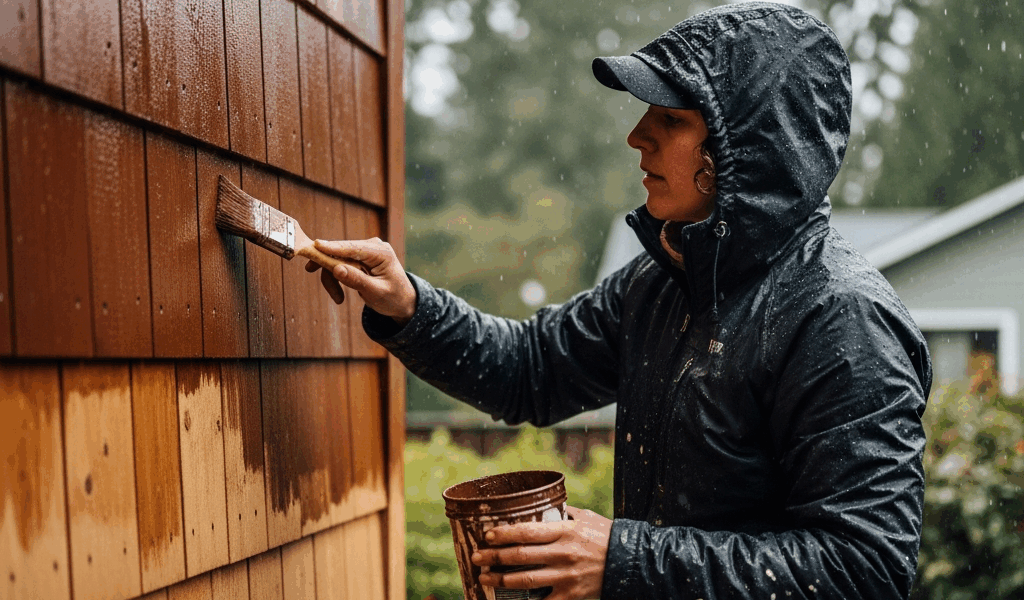
You live in the Pacific Northwest and last year’s exterior paint job is already showing mildew under the eaves. Generic paint recommendations from national sites do not account for 37 to 55 inches of annual rain, months of sustained wet conditions, and wood siding that expands and contracts more aggressively than anywhere else in the country. Here is what actually holds up.
Why Generic Paint Recommendations Fail Here
The Pacific Northwest averages 37 inches in Portland and 55 inches in Seattle’s wetter suburbs. Paint on a home in Phoenix faces UV degradation. Paint on a home in Tacoma faces extended wet periods, mildew growth on north-facing surfaces, and wood siding that stays damp for weeks at a time during November through March. Mildew resistance matters more here than in any other US market. A paint that scores well in Consumer Reports testing conducted in New Jersey may blister in its second PNW winter.
What to Look for in High-Rainfall Exterior Paint
High mildewcide content. Look for the mildewcide percentage in the product data sheet — not all manufacturers disclose this, but the ones that do give you a meaningful comparison point. Higher mildewcide content means longer protection against the mold and mildew that thrive in PNW humidity.
100% acrylic latex formulation. Acrylic outperforms alkyd in rain. It is more flexible when wet wood expands and contracts, and it allows moisture vapor to pass through the film rather than trapping it underneath. Trapped moisture causes blistering — the number one exterior paint failure in wet climates.
Film thickness of 4 mils or more. Thicker film provides better moisture barrier and longer service life. Check the product data sheet for dry film thickness per coat.
Avoid oil-based paints on exterior wood in wet climates. Oil-based finishes are less flexible than acrylic. When wet wood moves, oil-based paint cracks. Moisture gets behind the crack and accelerates rot rather than protecting against it.
Top Exterior Paint Picks for Wet Climates
Sherwin-Williams Emerald Exterior. Highest mildewcide content in the Sherwin-Williams lineup. 100% acrylic. Self-priming on previously painted surfaces. Around $90 or more per gallon. This is the paint most PNW painting contractors reach for when the homeowner wants the longest-lasting result.
Benjamin Moore Aura Exterior. Excellent adhesion in wet conditions and strong mildew resistance. The Color Lock technology maintains color consistency even in extended overcast conditions. Premium price point, but the performance in rain justifies it.
Behr Marquee Exterior. Available at Home Depot, lower price point than Sherwin-Williams or Benjamin Moore, with good mildew resistance. For homeowners painting their own exterior, this is the best balance of performance and accessibility.
Elastomeric Paint: When to Use It on NW Homes
Older wood-clad homes in the Pacific Northwest — especially those with cedar or fir siding from the 1950s through 1980s — benefit from elastomeric coatings. These stretch as the wood expands and contracts seasonally, reducing the cracking and peeling that standard paints develop after 5 to 7 years in wet climates.
Sherwin-Williams Duration Home with elastomeric properties is the go-to for this application. Cost is 30 to 50% more than premium acrylic. Worth the premium for homes that currently repaint every 5 years — elastomeric extends the cycle closer to 10 to 12 years, which makes the per-year cost lower despite the higher upfront price.
Prep Is More Important Than Product
In high-rainfall climates, surface preparation determines paint longevity more than which product you choose. A $90 gallon of Emerald Exterior over poorly prepped siding will fail before a $50 gallon of Behr over properly prepped siding. Every time.
Power wash to remove existing mildew. Treat all remaining mildew with a bleach solution and let it dry fully before priming. Prime bare wood with an oil-based primer — even under an acrylic topcoat, oil-based primer provides the best adhesion to bare wood. Caulk all gaps before painting. Every crack and gap that is not sealed is a water entry point that will cause paint failure from behind the film.
Skipping these prep steps on a home that sees 50 inches of rain per year causes paint failure in year 2 regardless of how much you spent per gallon.

Stay in the loop
Get the latest northwest renovate updates delivered to your inbox.