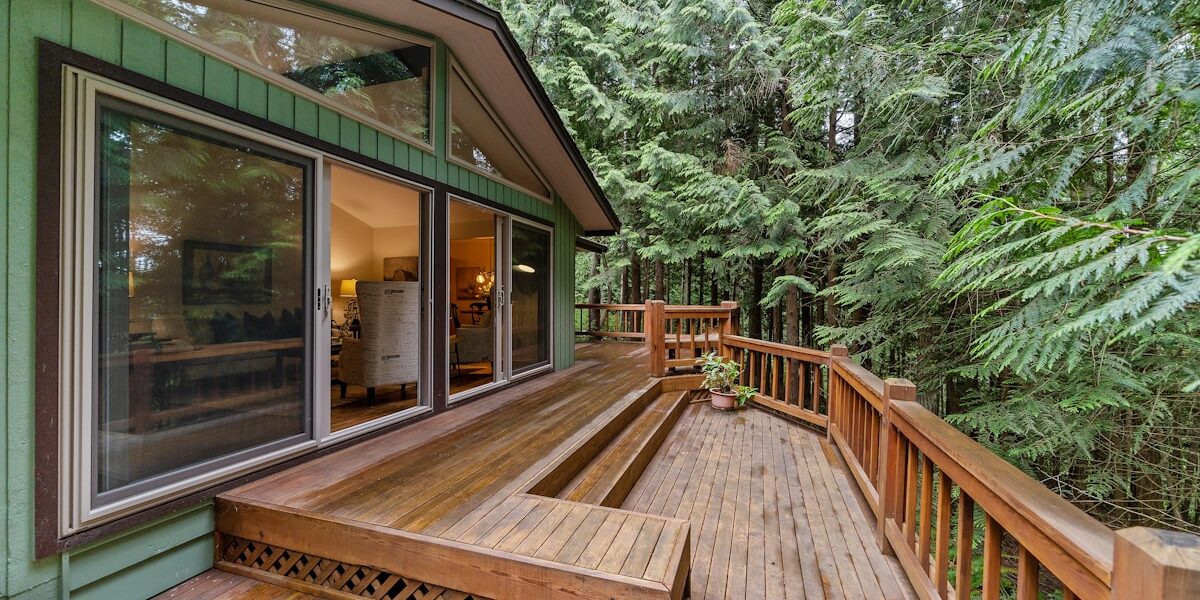
Deck building in the Pacific Northwest has gotten complicated with all the material options, permit variations, and conflicting advice about what handles our climate flying around. As someone who’s helped homeowners navigate deck projects from Seattle to Portland, I learned everything there is to know about what actually holds up versus what fails after a few rainy seasons. Today, I’ll share it all with you.
Adding a deck to your Pacific Northwest home extends your living space outdoors and increases property value. However, the region’s unique climate demands careful planning around permits, materials, and weather considerations. From the rain-soaked winters to the occasional summer drought, every decision you make affects how your deck will perform over the coming decades.
Permit Requirements in Washington and Oregon
Probably should have led with this section, honestly — permits trip up more deck projects than any other issue. Both Washington and Oregon require building permits for most deck construction. In Washington, permits are typically required for decks more than 30 inches above grade or attached to the house. Oregon follows the same general guidelines, though specific requirements vary by county and municipality.
The permit process involves submitting detailed plans showing deck dimensions, footing locations, ledger board attachment details, and railing specifications. Expect permit fees ranging from $200-$800 depending on deck size and your jurisdiction. Plan for 2-4 weeks for permit approval in most areas, though some jurisdictions offer over-the-counter permits for simple deck projects.
Key code requirements include: footings extending below the frost line (typically 12-18 inches in the PNW), proper ledger board attachment with flashing, railing height of at least 36 inches (42 inches in some areas), and baluster spacing no more than 4 inches apart.
Material Options for Pacific Northwest Decks
Pressure-Treated Lumber: The most affordable option at $15-$25 per square foot installed. Modern pressure-treated wood uses copper-based preservatives that resist rot and insects. The main drawbacks are annual maintenance requirements, splinters as the wood ages, and the need for regular staining or sealing. Expect 15-20 years of service life with proper maintenance.
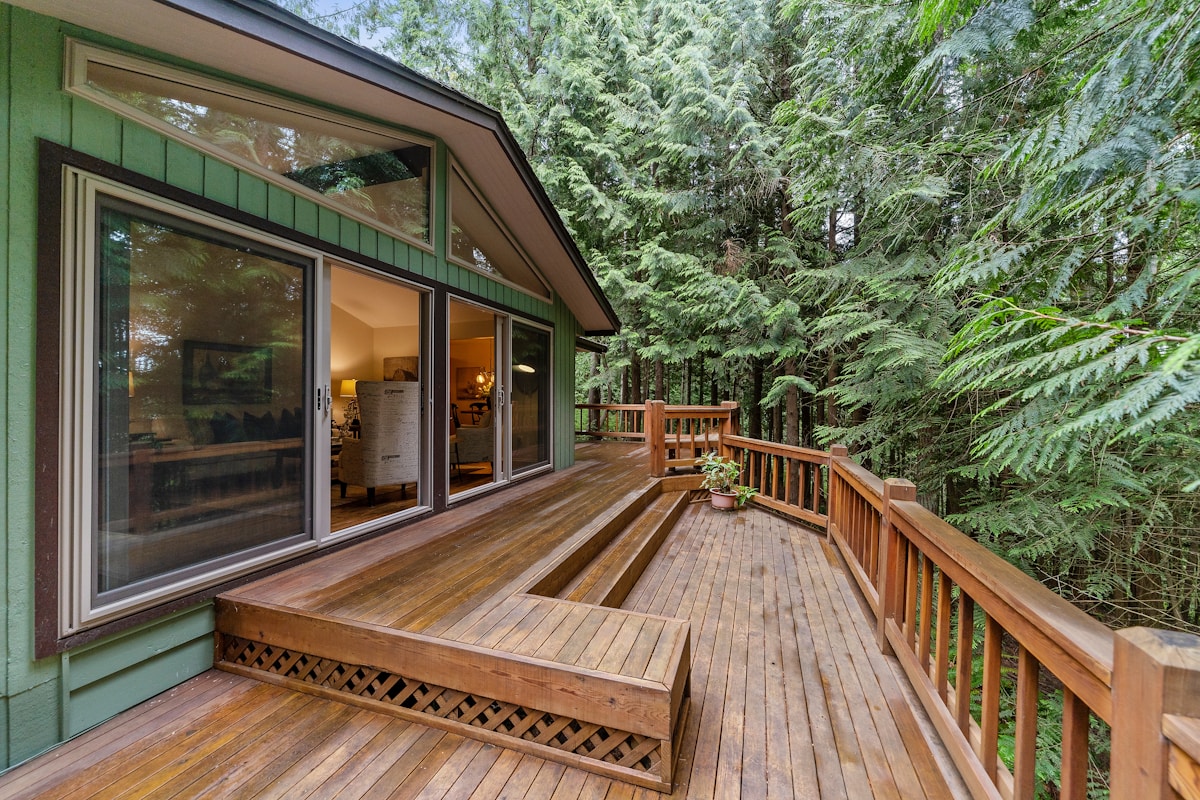
Western Red Cedar: A Pacific Northwest native that naturally resists rot and insects. Cedar costs $25-$40 per square foot installed but offers beautiful grain patterns and a warm, natural appearance. It weathers to an attractive silver-gray if left untreated, though many homeowners prefer to maintain its original color with annual sealing. Lifespan: 20-25 years.
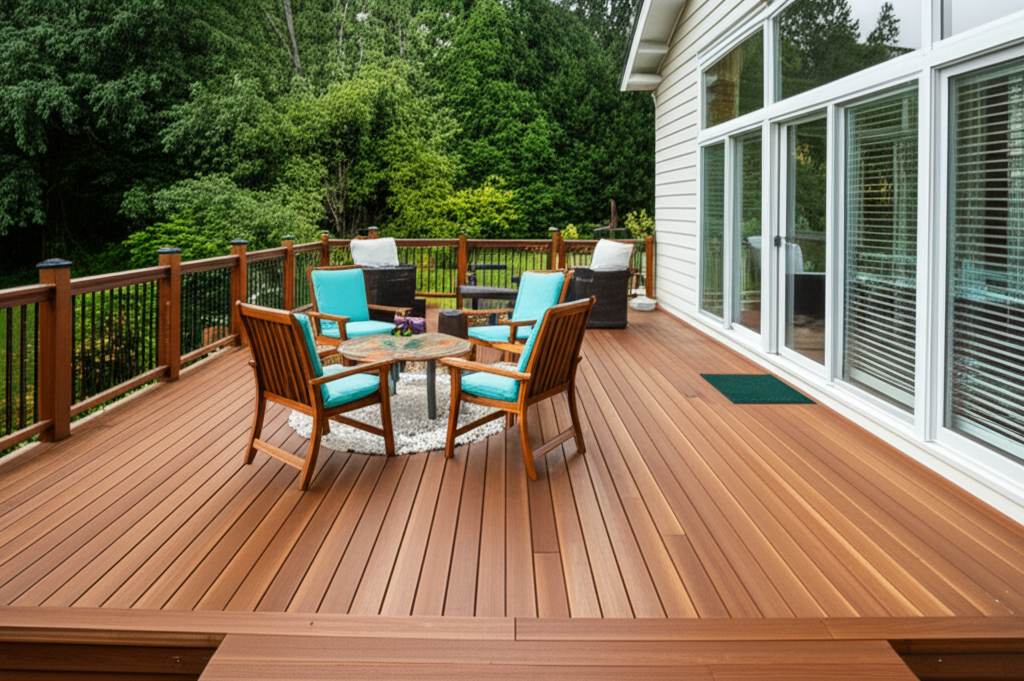
Composite Decking: That’s what makes composite endearing to PNW homeowners — minimal maintenance in a climate that punishes materials that need constant attention. Made from wood fibers and plastic polymers, composite decking costs $30-$60 per square foot installed. Top brands like Trex, TimberTech, and Fiberon resist fading, staining, and scratching. While initially more expensive, the 25-year warranties and lack of annual maintenance make composite increasingly popular in the PNW. The material stays cooler than solid plastic alternatives and resists the moss growth common in our climate.
Tropical Hardwoods: Ipe, cumaru, and tigerwood offer exceptional durability and beauty at $45-$75 per square foot installed. These dense hardwoods naturally resist rot, insects, and wear without chemical treatment. The main considerations are higher upfront costs, specialized installation requirements, and environmental sourcing concerns. Lifespan can exceed 40 years.
Pacific Northwest Weather Considerations
Our region receives 35-50 inches of annual rainfall, creating unique challenges for deck construction. Moisture management is critical at every stage.
Drainage: Deck boards should be spaced 1/8 to 1/4 inch apart for drainage and expansion. Consider joist tape to protect the structural framing from water damage. Some homeowners opt for under-deck drainage systems to create dry storage or patio space below.
Moss and Algae: The PNW’s damp, shaded conditions promote moss and algae growth. Composite decking with textured surfaces resists this better than smooth materials. Plan for annual or semi-annual cleaning with appropriate deck cleaners. Trimming overhanging vegetation and improving air circulation helps reduce growth.
Sunlight Exposure: South-facing decks get more sun and dry faster, reducing moss issues but accelerating fading in some materials. North-facing or heavily shaded decks stay damper and benefit from composite or naturally rot-resistant materials.
Foundation Options
Concrete Pier Footings: The most common approach in the PNW. Pre-cast concrete piers or poured footings extend below the frost line and support 4×4 or 6×6 posts. This method works well for most residential decks and meets code requirements.
Helical Piles: Steel screw piles driven into the ground offer advantages in difficult soil conditions or tight access areas. They’re more expensive but minimize site disruption and work well in the clay soils common throughout the region.
Ledger Board Attachment: For attached decks, the ledger board connection to your house is critical. Modern code requires through-bolts or lag screws with proper flashing to prevent water intrusion. Many deck failures trace back to improper ledger installation.
Railing Requirements and Options
Railings are required on any deck surface more than 30 inches above grade. Options include: wood railings matching the deck material ($30-$60 per linear foot), aluminum or steel systems ($40-$80 per linear foot), cable railings for unobstructed views ($50-$100 per linear foot), or glass panel systems for maximum visibility ($100-$200 per linear foot).
Cost Factors and Budgeting
A typical 300-square-foot pressure-treated deck costs $6,000-$10,000 installed. The same size in composite runs $12,000-$20,000. Premium hardwood decks can exceed $25,000. Factors affecting price include: deck height and complexity, stairs and multi-level designs, railing choice, permit fees, and site preparation needs.
Maintenance by Material Type
Pressure-treated lumber requires annual cleaning, resealing every 1-2 years, and eventual board replacement as boards crack or warp. Cedar needs similar maintenance to preserve its color, though it can be left to weather naturally. Composite requires only periodic cleaning with soap and water. Tropical hardwoods benefit from annual oiling to maintain their rich color but perform well even without it.
Investing time in proper planning ensures your deck serves your family well for decades, providing outdoor living space that enhances the Pacific Northwest lifestyle throughout our mild but wet seasons.




Stay in the loop
Get the latest wildlife research and conservation news delivered to your inbox.