Why Bathroom Caulk Turns Yellow
Bathroom caulk has gotten less clear-cut with all the conflicting advice flying around. Scrub it. Bleach it. Replace it. Nobody agrees — and honestly, most of the advice misses the real point entirely. Not all yellowing is the same thing, and the fix that works for one type will do absolutely nothing for another.
As someone who’s dealt with this across three rental bathrooms and my own master shower, I taught myself the working side of caulk discoloration the hard way. Today, I will share it all with you. The yellowing you’re staring at right now falls into one of three distinct buckets.
Mold and Mildew Growing Inside the Caulk
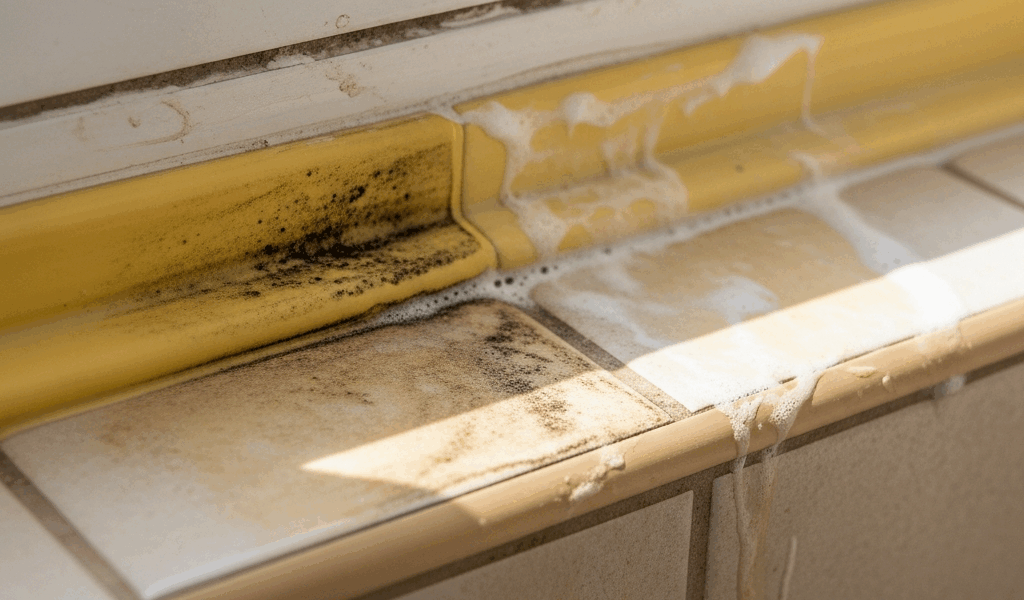
This is the most common culprit. Especially in showers and tub surrounds where moisture never fully dries out. Mold doesn’t just sit on the surface — it grows into the silicone itself, which is why wiping it down accomplishes almost nothing permanently. The caulk stays damp. Silicone is porous at the microscopic level. Dark spores settle in and multiply.
You’ll recognize this one fast. The discoloration is deep, brown-black streaking that runs into the bead rather than sitting on top. Won’t wipe away with a cloth. That’s your tell.
Silicone Degradation From Age and UV Exposure
But what is silicone degradation, exactly? In essence, it’s the polymer chains inside your caulk breaking down over time. But it’s much more than that. A quality 100 percent silicone bead holds up roughly 5 to 10 years in wet areas before compounds start releasing and oxidizing — which is what produces that telltale yellow color. Direct sunlight speeds this up. Repeated bleach-based cleaning speeds it up faster.
When this is your problem, you’ll see cracking alongside the yellowing. Maybe slight peeling. The bead feels brittle instead of flexible. This isn’t a cleaning issue at all. It’s a replacement issue, full stop.
Soap Scum and Hard Water Mineral Buildup
Sometimes it’s just dirt. Soap residue, hard water deposits, mineral buildup — all of it accumulates on the caulk surface and creates a dull yellow or brownish film. This staining sits on top and does wipe away, at least partially. Cosmetic, not structural. Usually shows up within the first 3 to 6 months after caulking and means the cleaning routine needs adjusting.
When You Can Clean It vs. When You Need to Replace It
Before spending two hours scrubbing or ordering tools online, run this quick diagnostic: wet the yellowed area and try wiping it away with a cloth or soft brush.
Comes off, even partially? Surface staining. Clean it. Stays put with discoloration running deep into the bead? Mold or degradation. Replace it.
Also check for physical damage while you’re down there. Cracking, peeling, separation from the tile, any sponginess at all — that caulk has failed. Don’t bother cleaning it. Pull it out and start fresh.
Worth putting near the top. Here’s the thing I wish I’d known years earlier: bleach-based cleaners and bleach pens will whiten yellow caulk fast. They absolutely work. Use them more than once or twice per year, though, and you’re actively accelerating silicone breakdown. The bleach eats into polymer chains. I’m apparently someone who cleans obsessively, and a pack of Clorox bleach pens worked great for me initially while the long-term results never ended well. I used them monthly on my master shower caulk for almost a year. Month eight — cracking. Don’t repeat what I did.
How to Clean Yellow Caulk That Is Still in Good Shape
If your caulk is physically intact and the yellowing is surface-level, cleaning is your answer. So, without further ado, let’s dive in.
Step One — Baking Soda Paste
Mix baking soda with just enough water to form a thick paste — think peanut butter consistency, not soup. Apply it directly to the yellowed caulk using an old toothbrush or a grout brush. Work it into the bead, really get in there. Let it sit 10 to 15 minutes. The mild abrasive action lifts light stains without touching the silicone chemically.
Step Two — Hydrogen Peroxide
If baking soda didn’t fully clear it, move to 3 percent hydrogen peroxide — the standard brown-bottle drugstore kind, usually $1.50 to $2.00 at any pharmacy. Spray it on or apply with the same brush. Give it 5 to 10 minutes of dwell time. It bubbles as it works, which physically helps lift embedded staining. Rinse thoroughly and dry with a cloth afterward.
Step Three — Commercial Mold Remover
For stubborn discoloration that’s still surface-level, a dedicated mold and mildew remover might be the best option, as bathroom caulk cleaning requires something with real fungicidal punch. That is because surface mold roots itself into texture faster than most people expect. Tilex or Lysol Mold & Mildew Remover both work well here. Follow product directions — usually around 10 minutes dwell time. Use them sparingly, though. Harsh on silicone with repeated exposure.
After cleaning, run your exhaust fan for a full 30 minutes to dry everything out completely. Don’t skip this step. Moisture left behind just feeds the next generation of mold growth.
How to Remove and Replace Yellowed Caulk the Right Way
Cracked, degraded, or deep yellowing that won’t budge? Replacement is the only real answer here.
Remove the Old Caulk
Score the bead with a utility knife — run the blade along both edges where silicone meets tile or tub. Don’t dig into the substrate, just cut the bond. A caulk removal tool (they run $8 to $15 at any hardware store, usually near the caulk display) or a standard 5-in-1 painter’s tool works great for prying and pulling. Work in sections. Once you’ve got it started, pull steadily. Good old failed caulk comes out in strips. If it shatters into pieces, that confirms it was well past gone.
Clean the Gap
Wipe the gap with a cloth first. Then run a cotton swab soaked in isopropyl alcohol along the entire joint — removes residue and kills any remaining mold spores in one pass. Let it dry completely. At least 30 minutes, longer in bathrooms that stay humid. Any moisture trapped underneath will cause the new caulk to fail ahead of schedule.
Apply New Caulk
Buy 100 percent silicone caulk specifically rated for tub and shower areas. Latex or acrylic breaks down much faster in wet zones — skip it entirely. GE Silproof or DAP Dynaflex 230 are both reliable mid-range options at around $8 to $12 per tube. Avoid the cheapest silicone on the shelf. It yellows faster. That’s not marketing — it’s just what happens.
Tape both sides of the joint with painter’s tape before caulking. That tip alone changed everything about my results — clean edges, easier cleanup, no ragged lines. Apply a steady bead, smooth it with a wet finger or a caulk finishing tool, then remove the tape immediately while the silicone is still wet. Cure time is 24 to 48 hours before any water exposure. Check your specific product label since that varies by brand.
How to Keep Caulk From Turning Yellow Again
Once it’s fixed, the goal is keeping it fixed. That’s what makes good caulk maintenance endearing to us homeowners — it’s genuinely one of those small habits that pays off for years.
- Run the exhaust fan during every shower and for 30 minutes after. Non-negotiable. Moisture is the primary enemy here, full stop.
- Squeegee shower walls after each use to pull standing water away from joints where mold breeds fastest.
- Apply a mold inhibitor or protective reseal annually in high-moisture zones — every two years in normal bathrooms with good ventilation.
- Use mold-resistant silicone when you recaulk next time. Dow Corning 795 or GE Mold Kill silicone both have built-in fungicides that make a real difference long-term.
Those four habits extend caulk life by years and cut the yellowing problem dramatically. First, you should start with your exhaust fan — at least if you want the fastest possible return on effort. Everything else builds from there.
Related: If the joints are dark or spotted rather than cracked, use this safe black-grout cleaning and moisture guide before applying caulk, sealer or a stronger chemical.
If wall panels meet a tub, receptor, or trim joint, review the FRP shower-wall installation and sealing guide before replacing caulk; a failed assembly detail cannot be solved by cosmetic recaulking alone.

Stay in the loop
Get the latest northwest renovate updates delivered to your inbox.