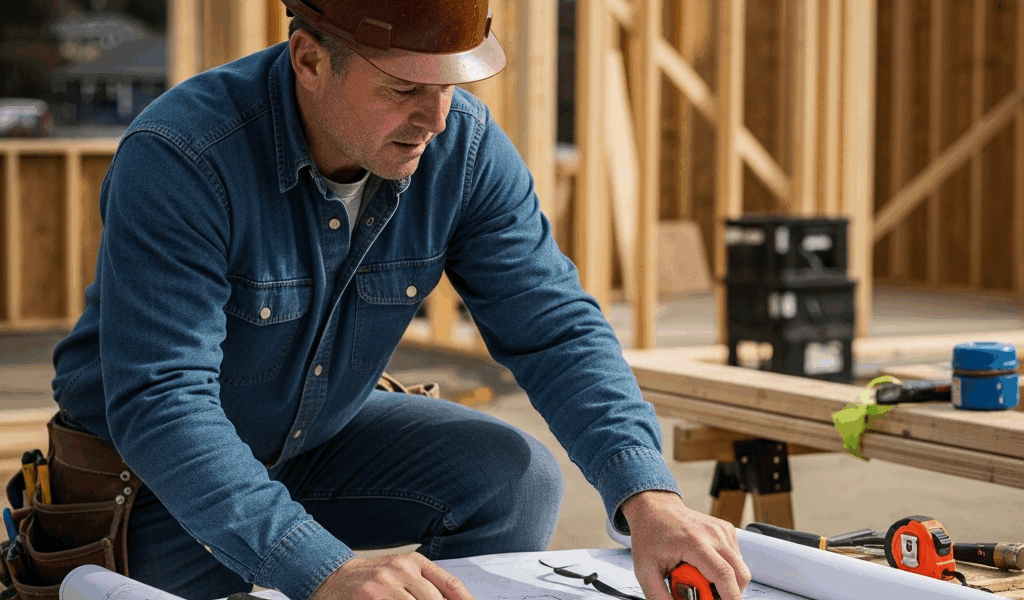
DADU Builders in Seattle — How to Find the Right Contractor
If you’ve been searching for a DADU builder in Seattle, you already know how confusing the landscape is. Half the results are contractor directories where nobody has actually built a detached accessory dwelling unit in the city. The other half are individual contractor websites that are basically digital brochures with no useful information. I’ve spent the last several years working on residential renovation and infill projects across the Puget Sound region, and DADUs specifically have become a dominant part of the conversation in every neighborhood from Beacon Hill to Crown Hill. This guide exists because I couldn’t find a single useful resource that explained what I actually needed to know before hiring someone — so I wrote it myself.
What Is a DADU and Why Seattle Is Building Them
DADU stands for Detached Accessory Dwelling Unit. It’s a freestanding residential structure built on the same lot as a primary home — not attached to the house, not a basement conversion (that’s an AADU, an attached accessory dwelling unit), but a completely separate building with its own entrance, kitchen, and bathroom. Think of it as a cottage, a backyard house, a carriage house. Seattle uses “DADU” specifically, and that terminology matters when you’re pulling permits or searching for contractors who actually know the local code.
Seattle started enabling DADUs in earnest after a series of zoning updates that accelerated significantly in 2019 and 2020. The city removed owner-occupancy requirements, eliminated off-street parking mandates for new ADUs, and — critically — allowed one AADU and one DADU on a single-family lot simultaneously. That last change was a big deal. It meant a homeowner on a standard 5,000-square-foot Seattle lot could theoretically house three separate households: the main house, a basement apartment, and a backyard DADU.
Why is Seattle building so many of them? A few reasons, and they’re all local.
- Seattle’s median home price has made new construction prohibitively expensive for most families. A DADU offers a way to add housing density without tearing down a neighborhood’s existing character.
- The city faces a documented housing shortage. DADUs are a gentle-density solution that fits within the existing single-family zoning framework.
- Rental income. A well-built 400-square-foot DADU in a neighborhood like Fremont or Columbia City can rent for $1,600 to $2,200 per month, helping homeowners offset mortgage costs.
- Multi-generational living. Plenty of the DADU projects I’ve seen are built for aging parents or adult kids who need proximity but not shared walls.
The zoning flexibility Seattle now offers is genuinely unusual compared to most U.S. cities. That makes Seattle contractors with DADU-specific experience more valuable — and harder to vet if you don’t know what to look for.
What to Look For in a DADU Builder
Probably should have opened with this section, honestly. Because most people start Googling costs before they’ve figured out who they want to hire, and that’s exactly backwards.
Seattle Permitting Experience — Specifically
The single most important qualification for a DADU builder in Seattle is direct experience pulling permits through Seattle’s Department of Construction and Inspections, commonly called SDCI. Not King County. Not Bellevue or Kirkland. SDCI has its own workflows, its own quirks, and its own staff reviewers who have specific expectations about how permit packages are assembled and submitted.
I made the mistake early on of hiring a contractor with a strong portfolio who had built extensively in unincorporated King County but had never navigated SDCI. The permit took four months longer than expected. That delay cost real money — the client was paying rent elsewhere while the project dragged on. Ask every contractor you interview this exact question: “How many DADU permits have you pulled through SDCI in the last two years?” If they can’t give you a specific number with project details, keep looking.
Design-Build vs. Architect-Separate
You have two main paths. In a design-build arrangement, the contractor’s firm handles both the architectural design and the construction under one contract. In an architect-separate arrangement, you hire an architect independently to produce plans, then put those plans out to bid with general contractors.
Design-build is faster and involves fewer coordination problems. The person drawing the plans knows exactly how the builder works, which means fewer change orders when something in the field doesn’t match the drawings. The tradeoff is less design flexibility — you’re working within the builder’s preferred systems and finishes.
Architect-separate gives you more control and potentially more creative latitude. It also means you’re managing two relationships simultaneously, and if the architect produces plans that are difficult to build efficiently, your construction costs go up. For a standard 400- to 500-square-foot DADU, design-build usually makes more practical sense unless you have specific aesthetic goals that require a dedicated design professional.
Portfolio Questions Worth Asking
Ask to see completed DADUs, not renderings or projects under construction. Ask for addresses so you can do a drive-by. Seattle DADU permits are public record through SDCI’s online portal — you can verify that a contractor actually pulled and closed the permits they claim.
- What was the permit-to-certificate-of-occupancy timeline on your last three DADU projects?
- Have you built on lots with significant slope? (Relevant in Seattle neighborhoods like Magnolia or Queen Anne.)
- Do you handle utility connections — water, sewer, electrical — or do you subcontract that work?
- What’s your standard allowance for finishes, and what happens when the client wants to exceed it?
That last question surfaces a lot. A builder might quote you $180,000 for a DADU but build the estimate around $4-per-square-foot LVP flooring and basic Moen fixtures. When you want something else, the number climbs fast.
DADU Cost in Seattle — 2026 Realistic Numbers
Here’s what I can tell you based on current Seattle project data. These aren’t numbers I pulled from a national cost database. They reflect what’s actually getting quoted and invoiced in the city right now.
Per-Square-Foot Baseline
Expect $300 to $425 per square foot for a standard DADU build in Seattle in 2026. That range covers design, permits, construction, and utility connections with mid-grade finishes. Below $300, you’re either getting a very stripped-down product or the contractor is underestimating. Above $425, you’re moving into high-end territory with custom millwork, premium appliances, and extensive site work.
Total Project Costs by Common Size
- 300 square feet (studio/efficiency): $95,000 – $130,000
- 400 square feet (1 bed/1 bath): $125,000 – $175,000
- 600 square feet (1 bed or 2 bed): $185,000 – $260,000
- 800 square feet (2 bed/1 bath, near maximum for most lots): $245,000 – $340,000
Seattle’s DADU size limits are tied to lot coverage rules. On a 5,000-square-foot lot, you’re typically capped at around 1,000 square feet for a DADU, but that’s a ceiling — the actual buildable square footage depends on setbacks, existing structures, and lot coverage calculations. Most Seattle DADUs end up in the 400- to 650-square-foot range for practical and financial reasons.
What Drives Costs Up
Site preparation is the big variable. A flat lot in Rainier Valley with easy access is a completely different project from a sloped lot in Wedgwood where you need a retaining wall and a gravel access path for equipment. Retaining walls alone can run $15,000 to $40,000 depending on height and materials.
Utility connections are frequently underestimated. Running a new water service tap from the street main costs between $8,000 and $18,000 in Seattle depending on distance, pavement cuts, and Seattle Public Utilities requirements. Sewer laterals add another $6,000 to $14,000. Some older properties can share the main house’s existing utility services with an upgrade; others can’t. This is something an experienced builder will assess early in the design phase. An inexperienced one won’t mention it until you’ve already signed a contract.
Detached structures also require a separate electrical service panel, typically a 100-amp sub-panel minimum, fed from the main house panel or directly from the utility. Figure $4,500 to $9,000 for that work, more if the main panel needs upgrading to accommodate the additional load.
The Seattle DADU Permitting Process
Surprised by how many homeowners approach DADU projects without any sense of what the permit process actually looks like. The timeline hits them hard.
Realistic Timeline from Application to Move-In
Here’s a real-world sequence for a straightforward Seattle DADU project:
- Design and pre-application (4–8 weeks): Plans produced, site survey completed, geotechnical report obtained if required by slope or soil conditions.
- SDCI permit application submission: Day 1 of the official clock.
- Initial SDCI review (6–14 weeks): Seattle’s current review times vary. Simple DADUs using the city’s pre-approved standard plans can move faster. Custom designs take longer and often generate a correction notice.
- Correction response (2–4 weeks): Applicant revises and resubmits based on reviewer comments.
- Second review and permit issuance (2–6 weeks): Most projects are approved at this stage.
- Construction (3–6 months): Depends on size, site complexity, and contractor workload.
- Final inspections and certificate of occupancy (2–4 weeks after construction completion).
Add it up and you’re looking at 10 to 18 months from “let’s do this” to move-in for a typical custom DADU. Projects using Seattle’s pre-approved ADU plan program can shave two to three months off that timeline.
Seattle’s Pre-Approved ADU Plans
Seattle offers a library of pre-reviewed DADU designs that have already cleared SDCI’s structural and design review. Using one of these plans means your permit application skips certain review queues. The designs are basic but functional — think clean, contemporary structures in the 350- to 500-square-foot range. Builders who regularly work with these plan sets can estimate costs very accurately because they’ve built the same unit multiple times.
Frustrated by the costs of custom permitting timelines, one homeowner I worked with on a Beacon Hill project chose a pre-approved 420-square-foot plan and saved roughly $12,000 in design fees and seven weeks in permit processing time compared to a comparable custom submission.
Common Permit Delays and How Good Builders Avoid Them
The most common permit delay I’ve seen is incomplete or inconsistent documentation at initial submission. SDCI will kick back an application that has mismatched dimensions between the site plan and the floor plan, missing setback callouts, or a geotechnical report that doesn’t match the proposed grading plan. Experienced builders and their architects know exactly what SDCI reviewers look for, and they do internal quality checks before submitting.
The second most common delay is the utility coordination problem. Seattle Public Utilities and Seattle City Light have their own review processes that run parallel to SDCI permitting. A contractor who doesn’t initiate those utility applications early — ideally before or simultaneous with the SDCI application — creates a bottleneck at the end of construction where the building is done but occupancy is stuck waiting on the utility connection inspection.
Ask any builder you’re seriously considering: “How do you coordinate SPU and City Light applications relative to your SDCI permit submission?” The answer tells you a lot about how organized their process is.
Finding the right DADU builder in Seattle is genuinely a research project. The market has more inexperienced operators than experienced ones right now, and the city’s permitting environment punishes mistakes with months of delay. Take your time with vetting. Ask specific questions about permit timelines and utility coordination. Get two or three bids with detailed scope breakdowns rather than single-line totals. The investment in doing the hiring process right is worth considerably more than whatever time you save by just going with whoever responds first.


Stay in the loop
Get the latest northwest renovate updates delivered to your inbox.