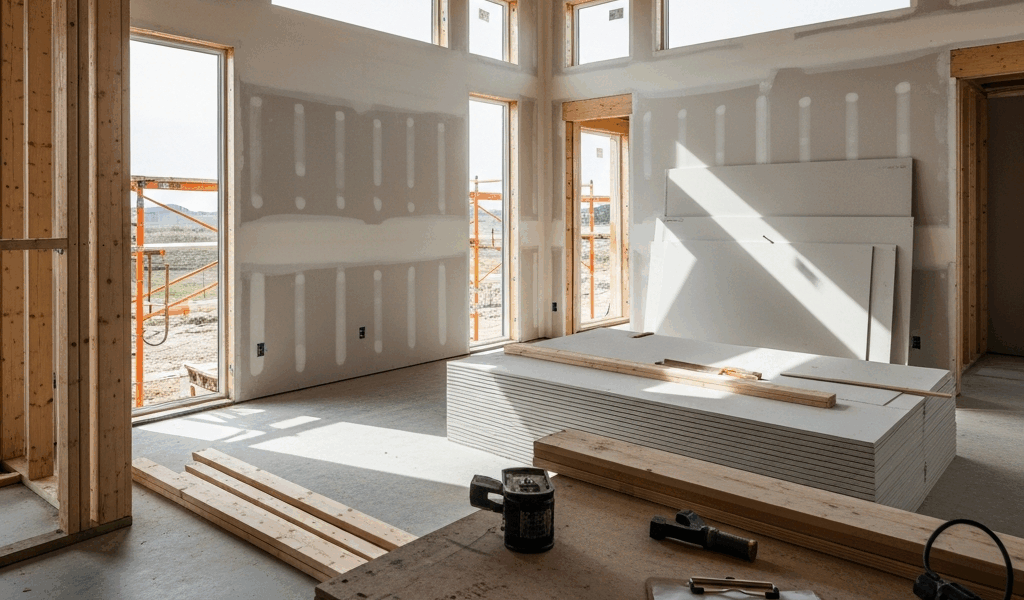
Average Master Suite Addition Cost in 2026
Master suite addition costs have started getting harder to follow with all the conflicting estimates flying around. I’ve been tracking residential construction costs since 2019, and the number most people walk in expecting is almost never the number they walk out with. The national average lands somewhere between $80,000 and $250,000 — but that range is practically useless on its own.
Here’s what actually matters: $200 to $400 per square foot. A typical 400 square foot addition — which is what most homeowners I work with end up building — runs $80,000 to $160,000. Where you live and what you’re putting inside that space moves the needle dramatically.
Pacific Northwest pricing is its own animal. Seattle and Portland are sitting at $350 to $425 per square foot right now. A colleague in Tacoma got a bid last spring at $380 per square foot — ground-level addition, mid-range finishes, nothing exotic. That 400 square foot suite hit $152,000 before permits even entered the conversation.
The Midwest runs closer to the $200 to $300 floor. Mid-Atlantic markets cluster around $280 to $340. Florida surprises people — it sits in the $250 to $350 range because higher labor costs eat up whatever savings the easier foundation work provides.
One thing I learned the hard way: that per-square-foot number doesn’t cover design fees or permits. Those add 5 to 10 percent on top. Non-negotiable. Don’t forget them.
Where the Money Goes — Itemized Breakdown
Worth putting near the top. Everyone wants to know where their $100,000 actually disappears to, and vague percentages help nobody make real decisions.
Foundation and Framing — 30 to 40 Percent
This is the biggest bite out of your budget, full stop. Foundation work alone chews through 10 to 15 percent. A new concrete slab runs $4 to $8 per square foot in most markets — so that 400 square foot suite needs roughly $1,600 to $3,200 just for the pad. Throw in stem walls, footings, and drainage work, and you’re looking at $8,000 to $12,800 for foundation only.
Framing runs another $12 to $18 per square foot. That’s lumber, labor, and the structural engineering required to tie everything into your existing home. Budget $4,800 to $7,200 for 400 square feet. I’ve watched framing costs spike badly when the existing home has unusual roof angles — or when someone insists on a second story instead of ground level.
Roof extension adds $6 to $12 per square foot. You’re not building new from scratch; you’re extending what’s already there. Cheaper than new construction, but it demands precise coordination with your existing structure. Figure $2,400 to $4,800 for that 400 square foot footprint.
Combined foundation and framing on a mid-range project: $15,200 to $24,800. On a $120,000 total that’s 13 to 21 percent. The exact percentage swings wildly depending on your total scope.
Plumbing and Electrical — 15 to 20 Percent
This is where homeowners consistently get blindsided. A master suite needs dedicated panel capacity for the bathroom and bedroom circuits. Running new electrical from your main panel costs $3 to $6 per linear foot — so if your panel sits 60 feet away, you’re already at $180 to $360 just for the wire run. Add the panel upgrade, breakers, outlets, switches, and lighting fixtures, and you’re at $8,000 to $14,000 for a full suite.
Plumbing is rougher. Hot and cold supply lines, drainage, potentially a new vent stack if you’re adding a bathroom. Supply lines run $2 to $4 per linear foot. Drain lines run $8 to $15 per linear foot — they need slope and support, which is why they cost more. A bathroom with a shower and double vanity needs roughly $5,000 to $9,000 in rough plumbing alone, then another $2,000 to $4,000 for fixtures on top of that.
HVAC extension into the new space: $2,000 to $5,000, depending on whether you’re extending existing ductwork or dropping in a mini-split system. Mini-splits run higher upfront but avoid the duct work entirely.
Total plumbing and electrical for a master suite with bath: $15,000 to $28,000.
Finishes — 20 to 30 Percent
Drywall, taping, and mudding runs $1.50 to $3 per square foot installed. That’s $600 to $1,200 for a 400 square foot suite. Primer and paint add another $0.50 to $1 per square foot — call it $200 to $400.
Flooring varies wildly. Carpet runs $3 to $8 per square foot installed. Luxury vinyl plank — the Shaw Floorté or COREtec stuff everyone’s using right now — runs $4 to $10. Hardwood jumps to $8 to $15. For 400 square feet, you’re looking at $1,200 to $6,000 depending entirely on what you choose.
Bathroom tile is its own line item. Ceramic wall tile runs $10 to $20 per square foot. Luxury tile hits $25 to $50. A master bath has maybe 50 to 80 square feet of wall tile — that’s $500 to $4,000 based purely on your material choices.
Countertops. Laminate runs $30 to $50 per linear foot. Quartz runs $75 to $150. A double vanity with a makeup area is roughly 6 linear feet. Laminate comes in at $180 to $300. Quartz: $450 to $900. The jump feels huge until you’re staring at it every morning.
Doors and trim. Interior doors run $150 to $400 each installed — you need at least a suite entry door plus a bathroom door, so budget $300 to $800. Door trim and baseboard adds $1 to $3 per linear foot. For a 400 square foot suite with roughly 120 linear feet of perimeter, that’s $120 to $360 more.
Bathroom fixtures. A toilet runs $150 to $600. A vanity runs $300 to $1,500. A shower or tub combo runs $800 to $3,000. Faucets, mirrors, and lighting add $400 to $1,200. A complete bathroom fixture package lands at $2,000 to $6,000.
Total finishes: $6,000 to $20,000 — the range is that wide because finish quality is where personal taste completely takes over the budget.
Permits and Design — 5 to 10 Percent
Design fees run $1,500 to $5,000 depending on whether you’re hiring a licensed architect or working with a designer. Some contractors bundle basic design into their bid — worth asking upfront.
Permits vary by jurisdiction. A master suite addition typically requires a building permit, electrical permit, plumbing permit, and sometimes a separate mechanical permit. Combined, expect $800 to $2,500. Seattle runs higher — $2,000 to $3,500 is typical there. Rural areas run lower, sometimes $400 to $800 total.
Structural engineering if required: $800 to $2,000. Some jurisdictions mandate it; others leave it to contractor judgment.
Total permits and design: $3,000 to $10,000.
Labor and Overhead — Embedded in All of the Above
Labor isn’t a separate line item — it’s baked into every number above. A general contractor typically marks up subcontractor work 15 to 25 percent, plus their own labor. That’s already factored into those per-square-foot estimates. Don’t go looking for it as a hidden add-on; it’s already there.
What Makes the Price Jump
Second Story Versus Ground Level
Ground-level additions are cheaper. Full stop. You’re typically using existing foundation support or adding a simple slab. Second-story additions require structural reinforcement of your existing walls and floors, additional support posts, and significantly more complex framing. Expect 25 to 40 percent higher costs the moment you go up instead of out.
Foundation Type — Slab Versus Crawlspace
Pouring a new slab: $4 to $8 per square foot. Adding a crawlspace: $8 to $15 per square foot, because stem walls, posts, and ventilation all cost money. Some homes have basements where you can finish within the existing footprint for dramatically less. I know someone who finished 500 square feet of existing basement for $35,000 total — instead of building an addition at all.
High-End Finishes
Switching from standard to luxury finishes costs real money at every turn. Carrara marble instead of ceramic tile adds $15 to $30 per square foot. Waterfall-edge quartz instead of laminate counters adds $2,000 to $5,000. A steam shower instead of a basic tile enclosure adds $3,000 to $8,000. Hardwood instead of carpet adds $4 to $12 per square foot. These decisions compound fast.
Structural Changes to the Existing Home
Adding over an existing garage means removing walls and replacing them with structural beams. Adding where exterior walls currently stand means relocating those walls and rerouting whatever utilities run through them. Structural changes like these add $5,000 to $20,000 depending on complexity — and that range is wide for a reason.
Permit Complexity and Site Conditions
Some jurisdictions require geotechnical surveys, environmental assessments, or septic inspections before they’ll issue a permit. Poor drainage or unstable soil conditions spike foundation costs. Utility relocation adds $1,000 to $5,000. Historical district restrictions add design complexity and approval time — both of which cost money.
How to Save Without Cutting Corners
Build Over an Existing Footprint
If you have a detached garage, covered patio, or existing outbuilding, building over that footprint eliminates foundation costs almost entirely. That’s $8,000 to $13,000 back in your pocket. That’s real money — not a rounding error.
Choose Standard Fixture Sizes and Products
A 30-inch vanity costs less than a 48-inch custom unit. Standard 36-inch doors cost less than custom widths. Standard bathroom layouts cost less than angled walls or unusual configurations. A Kohler Cimarron toilet from Home Depot runs about $200. A custom fixture from a boutique supplier runs $800. I’m apparently a Kohler person — the Cimarron has worked fine in two different projects while fancier alternatives never justified the price difference. Pick the Kohler.
Phase the Project
Build the shell and rough-ins first. Finish the interior later when you’ve rebuilt your savings. This spreads costs across two budget years and lets you tackle one system at a time instead of writing one enormous check.
Get Multiple Bids With Identical Specifications
Don’t compare an $85,000 bid against a $125,000 bid without knowing exactly what’s different between them. Give every contractor identical specifications — square footage, layout, finish materials, fixture models, everything down to the brand. Then the price gap reflects actual efficiency differences, not scope differences.
Don’t do what I did. I once collected three bids ranging from $78,000 to $132,000 for what I assumed was the same project. Turns out one contractor was estimating a 100-amp panel upgrade, another was estimating 200-amp, and the drywall finishes ranged from Level 3 to Level 5. When I locked down every specification in writing, those bids clustered between $94,000 and $101,000. That’s the number that was actually useful.
DIY What You Actually Can
Painting and flooring installation are reasonable DIY tasks — at least if you have the time, patience, and a YouTube account. That’s $1,200 to $2,000 in labor savings. Tile work is harder than it looks; factor in your skill level honestly. Plumbing and electrical? Don’t. The mistakes are expensive, the permits require licensed work in most jurisdictions, and the inspections will catch it anyway.
Before rough-in, map the vanity, mirror, and wet-area clearances using our bathroom outlet placement and code guide.
For weak soils, overlapping footings, or heavily loaded additions, learn how a mat slab foundation differs from slab-on-grade and spread footings.

Stay in the loop
Get the latest northwest renovate updates delivered to your inbox.