
Mineral spirits ventilation has gotten complicated with all the conflicting advice flying around. As someone who learned the hard way after getting lightheaded in my 10×10 workshop, I figured out everything there is to know about keeping yourself safe. Today, I will share it all with you.
The Quick Answer
You need at least 24 hours of active ventilation in a small room after using mineral spirits, though 48-72 hours is better if you want the smell completely gone. That’s with windows open and a fan running the whole time. Without ventilation? Don’t even think about it.
I know that sounds like a long time. Most people expect 15-20 minutes because that’s how long the solvent takes to evaporate. But evaporation and safe air quality are two different things entirely.
Why Small Rooms Are Actually Dangerous
Here’s what nobody tells you: mineral spirits vapors are heavier than air. They sink to the floor and stay there, building up in corners and low spots. In a small room, you can’t see this happening, but you’ll definitely feel it.
I remember working in my spare bedroom once. Windows open, felt fine for about 20 minutes. Then the dizziness hit. Apparently, I had created a nice little vapor pocket right where I was kneeling to paint baseboards.
The safety data sheets all say the same thing: “Use only in well-ventilated areas.” But what does that actually mean for a 100-square-foot room? A lot more than cracking a window.
The Real Timeline for Small Room Ventilation
First 15-20 minutes: The mineral spirits evaporate from whatever surface you applied them to. You can watch this happen as the wet shine disappears. Temperature matters here – warmer rooms speed this up, colder rooms slow it down.
Hours 1-24: The vapors are still concentrated in your room’s air. This is when you absolutely need cross-ventilation – air moving through the space, not just sitting there. One window open doesn’t cut it. You need air coming in one side and going out the other.
Hours 24-72: The smell drops to tolerable levels. “Tolerable” is subjective, honestly. Some people notice it for days. Others claim they can’t smell anything after a day.
72+ hours: Most folks consider the room safe at this point, though sensitive individuals might want to wait longer.
I always go with 48 hours minimum before I let anyone else use a room where I’ve worked with mineral spirits. Better safe than sorry.
What Proper Ventilation Actually Looks Like
OSHA has specific requirements for this, probably because people kept poisoning themselves. Here’s what works in the real world:
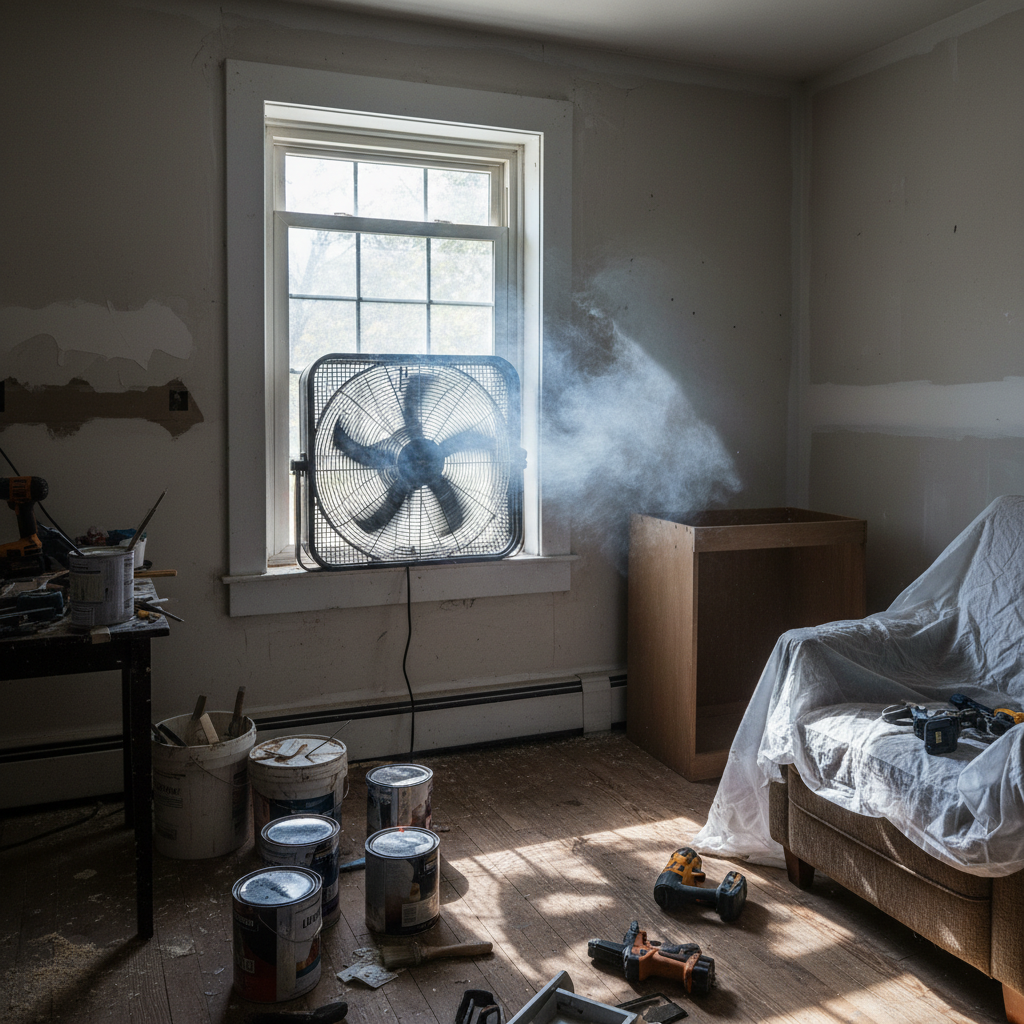
Cross ventilation is non-negotiable. Open windows or doors on opposite sides of the room. Put a box fan in one window facing out to actively pull air through the space. The fan makes a massive difference – passive airflow through open windows isn’t nearly enough.
Keep vapor concentrations below 10% of the lower explosive limit. That’s the official standard. In practical terms, if you can smell the mineral spirits strongly, you’re not there yet. If your eyes water or you feel any dizziness, the ventilation isn’t working.
Don’t rely on your nose alone. Odorless mineral spirits are a thing, and they’re just as hazardous despite the reduced smell. The lower odor means you get 200 ppm exposure limit instead of 100 ppm for regular mineral spirits, but that’s still not something you want to breathe all day.
Warning Signs Your Ventilation Isn’t Working
Your body will tell you when something’s wrong. Listen to it.
Stop immediately if you notice:
– Strong solvent smell that doesn’t fade after a few minutes outside
– Slight dizziness or feeling “floaty”
– Headache that comes on while working
– Nausea or upset stomach
– Eyes watering for no reason
– Feeling tired or confused
Leave the room right away. Go outside, breathe fresh air, and don’t go back in until you’ve dramatically improved the ventilation situation.
I ignored mild dizziness once. Just kept working, figuring I’d finish the last section and then take a break. Bad call. Ended up with a headache that lasted the rest of the day.
Setting Up a Small Room the Right Way
I’ve worked with mineral spirits in rooms ranging from walk-in closets to double garages. Small rooms need extra preparation.
Before you even open the container:
– Open all windows fully
– Set up a fan pointing out one window
– If possible, open the door and put another fan in the hallway
– Clear out anything you don’t need – less stuff means better airflow
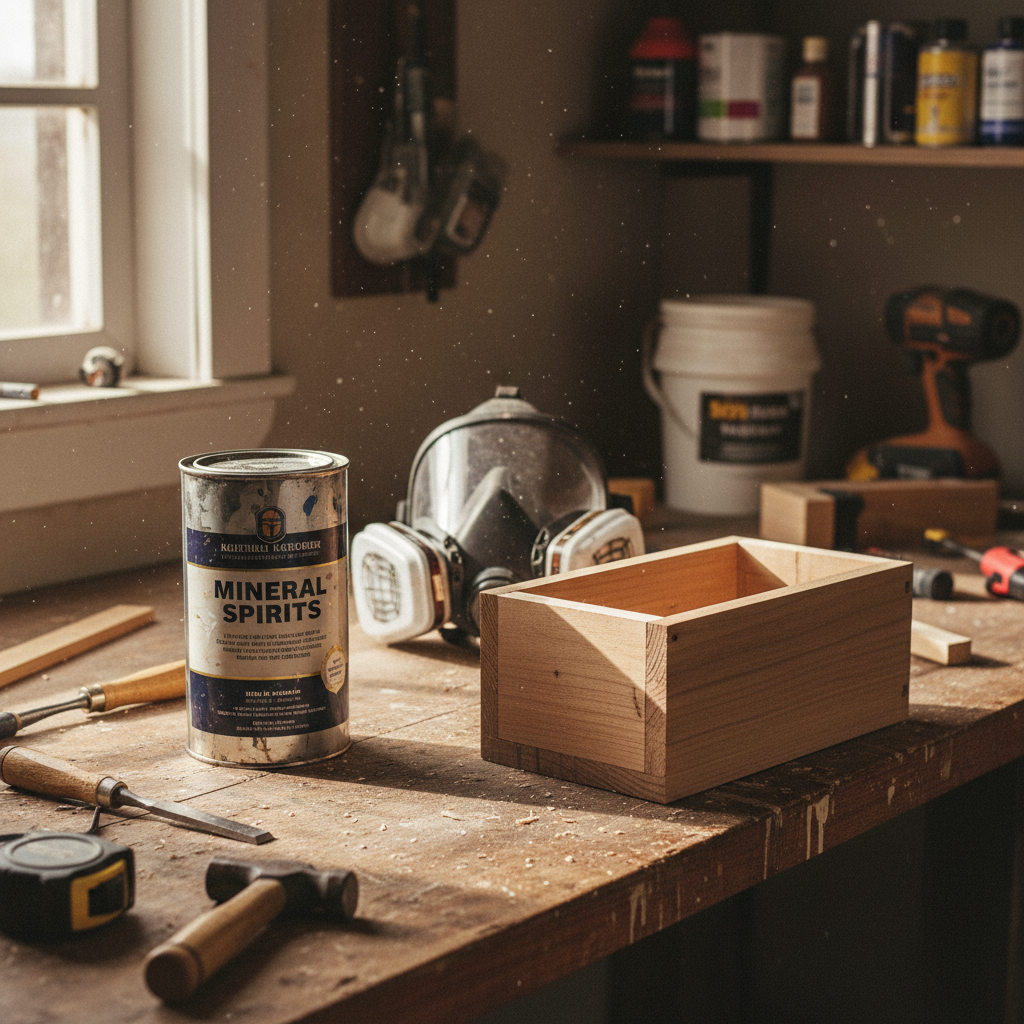
– Have a respirator ready, not just a dust mask
During the work:
– Keep the container closed when you’re not actively pouring from it
– Work as quickly as you reasonably can
– Take breaks outside the room every 20-30 minutes
– If you start feeling anything weird, stop
After you finish:
– Leave fans running for at least 24 hours straight
– Don’t sleep in that room
– Don’t let kids or pets in there
– Check on it from the doorway, but don’t hang out in the space
What About Respirators?
Some folks ask if they can skip the ventilation and just wear a respirator. Short answer: no.
The respirator protects you while you’re working, absolutely. But it doesn’t do anything about the vapor buildup in the room. When you take the respirator off, you’re still breathing that air. Plus, vapors are flammable – you don’t want them accumulating regardless of respiratory protection.
I use both. Respirator while I work, ventilation running before, during, and after. It’s not overkill when you’re dealing with VOCs in an enclosed space.
Get an organic vapor respirator, not a dust mask. The dust masks don’t filter chemical vapors at all. You’re basically wearing nothing if you go that route.
Temperature and Season Considerations
Summer is easier for this. Warm air helps the mineral spirits evaporate faster, and you don’t mind leaving windows open for days.
Winter gets tricky. You need that ventilation, but you also don’t want to freeze your pipes or run your heating bill through the roof. I’ve worked with mineral spirits in winter – you just have to plan better.
Close off the room from the rest of the house if you can. Let that room get cold while you ventilate it. The evaporation will be slower, but the vapors still need to go somewhere. Run a space heater in there if absolutely necessary, but watch out – heaters and flammable vapors don’t mix well.
Storage and Cleanup
The ventilation requirements don’t stop when you finish the project. You also need to think about cleanup rags and brushes.
Never leave mineral spirits-soaked rags in a closed container inside. They need air too, preferably outside air. I spread mine on my driveway to dry before disposal. Sounds paranoid, probably, but spontaneous combustion is a real thing with some solvents.
Store the mineral spirits container in a garage or shed, not inside your house. Even sealed containers can leak vapors over time.
Alternatives Worth Considering
If all this ventilation hassle seems like too much, you have options. Water-based alternatives exist for most mineral spirits applications. They’re not perfect substitutes, but they’re a lot safer for indoor use.
I still use mineral spirits for certain things – nothing cleans oil-based paint quite like it. But for general cleanup or thinning? I’ve switched to water-based products for jobs in small, poorly ventilated spaces.
The Bottom Line
Small room + mineral spirits = serious ventilation requirements. Don’t cut corners on this. The 24-72 hour timeline isn’t arbitrary – it’s based on how long it actually takes for vapor concentrations to drop to safe levels.
Open windows aren’t enough. You need active airflow moving through the space continuously. If your room doesn’t have windows on opposite walls for cross-ventilation, you might need to rethink your workspace entirely.
And honestly? If you’re working in a space smaller than about 100 square feet, consider doing the work outside if at all possible. Some rooms are just too small to ventilate properly, period.
The safety data sheets and OSHA regulations exist because people got hurt. Learn from their mistakes instead of making your own.
Sources:
– OSHA Painting Regulations
– Mineral Spirits Safety Data Sheet
– Engineer Fix: Mineral Spirits Smell Duration
– ManMadeDIY: Mineral Spirits Guide
– OSHA Technical Manual: Ventilation



Stay in the loop
Get the latest wildlife research and conservation news delivered to your inbox.