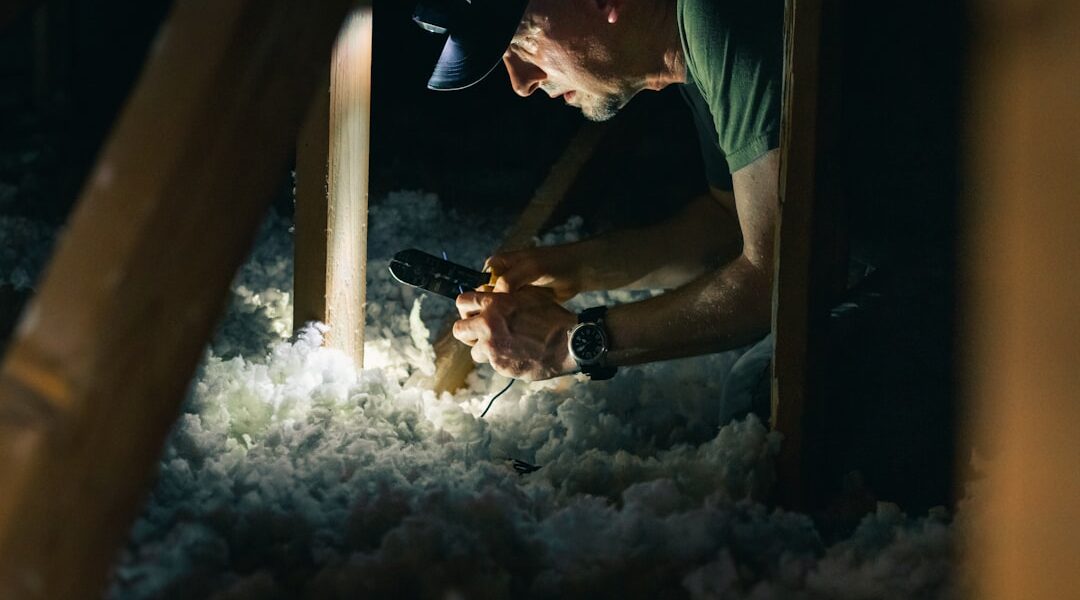
USA Insulation is a nationwide franchise network offering injection wall foam, blown-in attic insulation, air sealing, and—at some locations—spray polyurethane foam. There is no trustworthy single “average USA Insulation cost” or national review score: the scope, building, local franchise, material, climate, and repair work determine the quote and installation quality.
This independent 2026 buyer guide has no relationship with USA Insulation and did not test an installation. It separates the company’s current claims from government guidance and gives you a bid-comparison checklist. Do not use anonymous national price ranges or testimonials as a substitute for an itemized local quote, product documentation, and contractor verification.
USA Insulation review: the short verdict
USA Insulation is worth including in a three-contractor comparison when your existing walls are empty or under-insulated and you want an injection approach that may avoid removing interior drywall. It is not an automatic winner over cellulose, fiberglass, exterior continuous insulation, or spray foam.
The local franchise must prove five things:
- the existing assembly is dry, sound, and suitable for the proposed product;
- the bid states product, tested R-value, installed thickness or cavity assumptions, and coverage;
- the installation plan addresses wiring, plumbing, fire blocking, cladding, moisture, ventilation, and missed cavities;
- the contract defines repairs, exclusions, warranty responsibility, and verification; and
- the projected comfort or energy benefit is supported by an audit or building-specific analysis—not a generic percentage.
What USA Insulation currently offers
The national company site currently lists:
- USA Premium Foam injection wall insulation for existing wall cavities;
- blown-in attic insulation;
- air sealing; and
- spray polyurethane foam, with availability varying by location.
Injection foam and spray polyurethane foam are not interchangeable terms. The company describes its wall product as a proprietary injection foam placed through holes in the exterior or mortar joints. Spray polyurethane foam is mixed and sprayed onto an open surface and has different installation, chemistry, exposure, and re-entry considerations. Make the contract name the exact product.
How the injection-wall process works
USA Insulation’s published process generally includes:
- a pre-installation walkthrough;
- removing sections of siding where applicable or drilling through mortar for brick;
- drilling access holes between wall studs;
- injecting foam into the cavity;
- plugging holes or repairing mortar and reinstalling siding; and
- a post-installation walkthrough.
That description does not guarantee every cavity will fill uniformly. Fire blocks, diagonal bracing, old insulation, debris, knob-and-tube wiring, plumbing, irregular framing, double-stud sections, additions, and inaccessible cladding can change the plan. Ask how the crew maps each cavity and verifies completion.
What does USA Insulation cost in 2026?
No reliable public national average exists. The company offers location-based inspections and estimates rather than a national installed price sheet. Consumer-report ranges repeated by review sites often mix wall area with floor area, different products, different R-values, attic and wall work, rebates, and repairs.
What should an itemized quote include?
| Quote field | Why it matters |
|---|---|
| Exact product and manufacturer | Prevents injection foam, spray foam, cellulose, and fiberglass from being treated as equivalent |
| Area and assembly | Separates exterior wall area, attic floor area, rim joists, and other scopes |
| Existing condition | Records old insulation, moisture, wiring, cladding, access, and obstructions |
| Installed R-value or tested R-value per inch | Lets competing bids target comparable thermal performance |
| Air-sealing work | Shows which penetrations and leakage paths are included |
| Ventilation and moisture work | Prevents insulation from masking roof, bath-fan, drainage, or vapor problems |
| Prep and protection | Covers furniture, landscaping, siding, masonry, dust, and occupants |
| Repairs and finish standard | Defines responsibility for holes, mortar, siding, paint, drywall, or damage |
| Verification | Can include photos, depth markers, bag counts, infrared review, or blower-door testing where appropriate |
| Warranty and exclusions | Identifies who responds, whether labor is covered, transferability, and required maintenance |
Compare bids using the same denominator
Do not compare “whole house” totals until every contractor is pricing the same surfaces and outcome. Calculate:
- net wall or attic area actually treated;
- target R-value and air-sealing scope;
- removal, disposal, access, and repair work;
- testing and documentation;
- permit or inspection costs where required; and
- the final cash price after—not before—verified rebates.
A lower price can simply omit air sealing, ventilation corrections, siding repairs, old-insulation removal, or verification. A higher price is not proof of better work.
The federal insulation tax credit changed in 2026
Do not subtract a 30% federal Energy Efficient Home Improvement Credit from a 2026 insulation quote. The IRS says the Section 25C credit is not allowed for property placed in service after December 31, 2025. Older articles and contractor pages may still describe the former insulation-material credit of 30% up to the applicable annual cap.
A credit for qualifying work completed in 2025 may still matter when filing the 2025 return, subject to the law and Form 5695. That is different from beginning a new project in 2026. State, local, and utility rebates may remain available; verify eligibility directly with the program before signing. Never accept “you will get a credit” as a contractor guarantee.
Source: IRS 2025 Form 5695 instructions and termination notice.
How to evaluate USA Premium Foam claims
A local USA Insulation FAQ currently states that USA Premium Foam has an R-value of 5.1 per inch and describes that as up to 35% higher than conventional products. Treat that as a manufacturer/franchise claim until the contractor supplies the current product data and test basis for the exact installation.
The Federal Trade Commission’s R-value rule requires insulation sellers and professional installers to provide standardized R-value information. Ask for:
- the product data sheet and safety data sheet;
- the tested R-value and test method;
- the installed thickness or full-cavity assumption;
- any settlement, shrinkage, temperature, aging, or moisture qualifications;
- code-evaluation reports and required thermal or ignition barriers where applicable; and
- written confirmation that the proposed assembly meets local code.
Compare R-value at the assembly level. A high R-value per inch does not eliminate heat flow through studs, windows, headers, rim areas, or untreated cavities.
Reviews: evaluate the local franchise, not a national average
USA Insulation locations are locally operated franchises. A national testimonial, complaint, or star score may involve a different owner, crew, product, climate, contract, and building type. This page does not quote unattributed customers or publish a blended star rating.
Use this local-review method
- Identify the contracting legal entity. The proposal should show the company name, address, license number where applicable, and insurer—not only the national brand.
- Check recent local patterns. Look for repeated comments about cavity coverage, cleanup, siding or mortar repair, scheduling, odors, warranty response, and whether the promised scope matched the invoice.
- Separate sales reviews from performance evidence. A pleasant estimate is not proof of correct installation; one lower energy bill is not a controlled test.
- Ask for comparable references. Request projects with the same cladding, wall era, and product completed at least one heating or cooling season ago.
- Verify public records. Check state contractor licensing, insurance, permits, and disciplinary information where those systems exist.
- Read complaint responses. The response can reveal whether inspection, correction, and warranty processes are documented.
Questions to ask during the inspection
- What exact problem are you solving: heat flow, air leakage, moisture, noise, or all four?
- How did you determine which cavities are empty or under-insulated?
- What product will be installed in each location?
- What tested R-value will the completed scope add?
- How will you handle existing fiberglass, cellulose, plaster keys, fire blocks, wiring, and pipes?
- Will drilling affect siding or masonry warranties?
- How will holes and finishes be repaired, and what color/texture difference is acceptable?
- How will you prevent overfilling or damage to weak plaster and drywall?
- What photos or testing will prove cavities were treated?
- Who handles a missed bay, cracked finish, odor complaint, or future warranty inspection?
- Are labor, access, and finish repair included in the written warranty?
- What must occupants do during installation, ventilation, curing, and re-entry?
Injection foam versus spray polyurethane foam safety
Ask the contractor to identify the chemistry before applying safety guidance. USA Premium injection wall foam should not automatically be described as closed-cell spray polyurethane foam. If the scope includes spray polyurethane foam, the Environmental Protection Agency warns that isocyanates and other installation chemicals can cause asthma, sensitization, respiratory problems, and skin or eye irritation.
For spray polyurethane foam, request the product-specific safety data sheets, crew training, isolation and ventilation plan, personal protective equipment, and manufacturer re-occupancy instructions. EPA says re-entry depends on formulation and installation conditions; a universal “72 hours” claim is not a substitute for the manufacturer’s written procedure.
For any injected product, ask about ingredients, ventilation, curing, odor response, and what happens if the product must be drilled, removed, or disturbed during later electrical or plumbing work.
Source: EPA spray polyurethane foam safety guidance.
Moisture must be diagnosed before insulation
Insulation does not repair roof leaks, bulk-water entry, failed flashing, wet sheathing, drainage problems, bath fans venting into an attic, or indoor humidity. Filling a cavity can make later inspection and drying more difficult.
Before work, document:
- roof, plumbing, window, and cladding leaks;
- foundation and drainage conditions;
- mold or decay;
- attic and crawl-space ventilation;
- bath, kitchen, and dryer exhaust termination;
- indoor humidity and condensation patterns; and
- the wall assembly’s drying direction and vapor-control strategy.
Complex moisture conditions warrant a building-science professional who is independent of the product sale.
Will insulation lower energy bills?
It can, but no contractor can infer a specific percentage from square footage alone. Savings depend on existing insulation, leakage, climate, thermostat settings, HVAC efficiency, duct losses, fuel prices, occupancy, and how much of the thermal boundary is actually improved.
For a defensible estimate, collect at least 12 months of utility use, weather-normalize when possible, measure air leakage, and identify the dominant loads. Compare pre- and post-project energy use over similar weather rather than one bill. Comfort improvement can be valuable even when the financial payback is long.
Warranty checklist
The original page claimed a universal lifetime product-and-service warranty without presenting its terms. Warranty language can vary by franchise, product, location, owner, and contract. Before signing, obtain the complete document and check:
- product versus labor coverage;
- coverage for finish or cladding repairs;
- transferability to a future owner;
- registration and notice deadlines;
- exclusions for moisture, movement, pests, alterations, or existing conditions;
- who pays for inspection and access;
- the remedy—repair, replacement, refund, or discretionary action; and
- whether the local franchise or national company remains responsible if ownership changes.
USA Insulation versus other options
Ask competing contractors to propose the best assembly rather than forcing every bidder to sell injection foam. Depending on the house, alternatives may include:
- dense-pack cellulose in existing walls;
- fiberglass or cellulose plus targeted attic air sealing;
- exterior continuous insulation during siding replacement;
- rigid or spray foam at carefully selected rim or foundation locations;
- opening walls during a planned renovation; or
- fixing ducts, ventilation, moisture, or major air leaks before adding insulation.
Our existing-wall insulation comparison explains why the right material depends on assembly, access, moisture, and desired air control.
Red flags in any insulation proposal
- A guaranteed energy-savings percentage without building data.
- A tax credit promised for work placed in service during 2026.
- No product name, data sheet, R-value, or safety documentation.
- “Whole house” pricing with no measured scope.
- No moisture inspection or plan for existing wet materials.
- No written repair standard for siding, brick, plaster, or drywall.
- A demand to sign before getting comparable quotes.
- A warranty described verbally but not attached to the contract.
- No explanation of verification after hidden cavities are filled.
Bottom line
USA Insulation may be a reasonable bidder for retrofit wall, attic, and air-sealing work, but the brand name does not replace local due diligence. Ignore unsupported national cost ranges and blended review scores. Compare three itemized bids for the same thermal and air-sealing outcome, verify the exact product and local contractor, fix moisture first, and require written completion evidence and warranty terms.
For 2026 projects, also remove the expired federal 25C insulation credit from the budget unless a qualified tax adviser identifies a different applicable provision. Local or utility programs must be verified directly.
Primary sources
- USA Insulation: current services and published installation process
- Federal Trade Commission: R-value Rule
- FTC consumer guide to buying insulation
- Department of Energy: insulation R-values and assemblies
- IRS: termination of the Energy Efficient Home Improvement Credit after 2025
- EPA: spray polyurethane foam safety
When comparing insulation bids, apply the same safeguards in our Washington contractor-hiring guide: verify the exact business, normalize scope and allowances, and document changes before work begins.




Stay in the loop
Get the latest northwest renovate updates delivered to your inbox.