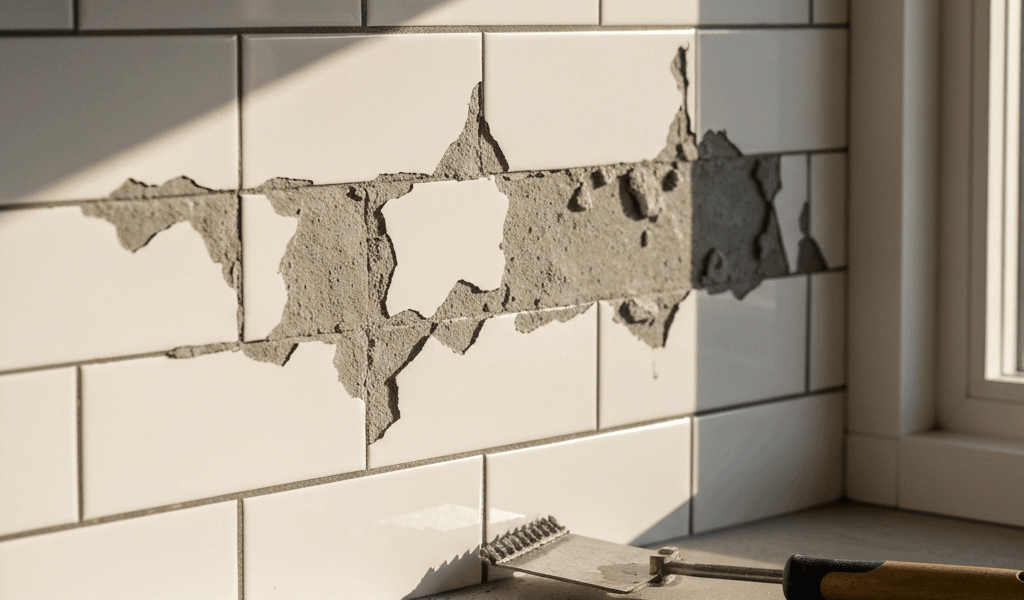
Why Kitchen Backsplash Grout Crumbles and Cracks
Kitchen backsplash grout crumbling between tiles has gotten complicated with all the moisture and heat flying around. One day you’re wiping down your splashback, and suddenly chunks of grout dust your counter. As someone who’s spent way too many evenings scrubbing kitchen tile, I learned everything there is to know about why backsplashes fail so spectacularly—and it all comes down to a few nasty culprits.
Moisture and heat. That’s your main enemy. Cooking releases steam constantly—your pasta boils, your pan sizzles, and that moisture settles right into the grout lines. Unlike bathroom tile (which you can somewhat control with ventilation), kitchen backsplashes absorb punishment from both humidity and radiant heat from the stove itself. Then there’s the installation side. If the original installer didn’t pack the grout properly or reached for unsanded grout in a situation demanding sanded, failure starts early—sometimes within the first year.
Thermal expansion creates another layer of trouble. Grout and tile expand at different rates when heated, cool down differently, and expand again. Year after year of heating and cooling creates micro-fractures that compound. Wrong grout type is brutal—unsanded grout works for narrow joints but lacks structural integrity for backsplash exposure. Age matters too. Grout older than seven or eight years simply degrades, especially if nobody sealed it during installation.
How to Tell If Your Grout Can Be Spot Repaired
Before grabbing tools, diagnose whether this is a DIY job or a “call someone” situation. The difference matters significantly.
Start with the scope. Is crumbling isolated to one or two grout lines, or does it span half your backsplash? Spot repair works brilliantly for isolated failures—maybe three or four lines that failed while everything else holds solid. If 50% of your backsplash is crumbling, you’re looking at systemic failure. That suggests the original installation was fundamentally flawed, and patch jobs won’t outlast the season.
Press the grout with a flathead screwdriver or grout saw. Real problem grout crumbles immediately—it practically disintegrates under light pressure. If only surface dust comes away and the grout underneath holds firm, you might just have mineral deposits or surface deterioration, not actual structural failure. Structural failure means you can literally hollow out the joint with minimal effort.
Wiggle the tiles next. Sound tiles shouldn’t move. If tiles around the crumbling grout shift or feel loose, the problem extends beyond grout—the adhesive underneath has failed. That’s not a spot-repair scenario anymore. You’d need to remove and re-set those tiles, which crosses into professional territory for most homeowners.
Check for water damage behind the backsplash if you can access it (or look for signs at the edges). Darkened drywall, soft spots, or mold indicate water has penetrated beyond the grout itself. Probably should have opened with this section, honestly—water damage changes the entire equation. You need someone who can assess substrate damage, not just regrow the joint.
One final check—smell it. Musty grout lines suggest mold growth inside the joint. That means moisture is trapped deep in, and a surface patch won’t solve the underlying problem.
Step-by-Step Grout Removal and Replacement
Gathered by a crumbling backsplash and determined to fix it myself, I assembled my tools and cleared my kitchen counter. Here’s what actually works without requiring professional intervention.
What you’ll need:
- Grout saw or oscillating multi-tool with grout blade ($30–80 if buying new; cheaper if borrowed)
- Shop vacuum with fine-dust filter
- Damp natural sponge
- Mixing bowl and drill with paddle
- Grout float (rubber blade, 3–4 inches wide)
- Grout—sanded or epoxy, depending on joint width and existing grout type
- Bucket of clean water
- Grout sealer (optional but highly recommended for backsplashes)
Step 1 — Remove loose grout carefully. Use your grout saw or multi-tool to cut out the crumbling grout. Go slow—you’re not demolishing, just removing what’s already failing. Work perpendicular to the joint, angling the blade to undercut slightly. This creates mechanical grip for new grout to lock into. Remove grout until you hit solid material that doesn’t crumble. Your joint might be deeper than expected. That’s fine and actually preferable.
Step 2 — Vacuum thoroughly. Dust and crumbs hiding in the joint will prevent new grout from bonding properly. Use your shop vac with the fine-dust filter—really get in there. Blow as much out as possible, then dampen a thin brush and scrub the joint to loosen trapped dust. Vacuum again. This step takes longer than it feels necessary, but it’s non-negotiable for a repair that lasts.
Step 3 — Dampen the joint (don’t flood it). Dry grout sucks moisture from new grout, causing it to cure too fast and shrink. But soggy joints trap water and create their own problems. Mist the joint with a spray bottle until it’s damp—like a wrung-out sponge. Wait 30 seconds. This primes the joint without oversaturating.
Step 4 — Mix new grout. Pour unsanded grout (if your joints are less than 1/8 inch) or sanded grout (if wider) into your mixing bowl. Add water slowly while stirring with a paddle. You want peanut butter consistency—thick enough to hold its shape but workable. Mix for a full two minutes. Let it sit for five minutes (slaking), then stir again briefly. This prevents weird texture issues in cured grout.
Step 5 — Apply with your grout float. Hold the float at a 45-degree angle and press grout firmly into the joint, working diagonally across the tiles. Pack it in deep—don’t skim it on the surface. Work in manageable sections (maybe 2–3 square feet at a time). Overfill slightly. You’ll scrape excess away in the next step.
Step 6 — Tool and clean. After 10–15 minutes (when grout firms up but still yields slightly to pressure), scrape excess from the tile faces using your grout float held at a steeper angle. Work diagonally across joints, not along them, to avoid pulling grout back out. Then dampen your sponge and gently wipe the joint to level it with the tile. Rinse your sponge frequently in clean water. This step determines whether your repair looks intentional or amateur.
One critical note on color: If your existing grout is darker or has a particular tone, match it exactly or your repair screams “patch job.” Bring a grout sample to the store and test it on a hidden area first if possible. Grout dries darker than it appears wet, and lighting affects perception dramatically. I once used what looked like a perfect match under fluorescent store lights, only to realize under my kitchen’s warm LED that it was obviously different. Frustrating doesn’t begin to cover it.
How Long Before You Can Use the Backsplash Again
Cure time matters more than you’d think. Standard sanded cement grout needs 72 hours before you resume normal kitchen duties—no splashing, no wiping, no steam from cooking. Unsanded grout is similar—three days minimum. Epoxy grout (premium option, higher cost) sets faster, sometimes 24 hours, but follow your product instructions precisely because epoxy behaves differently than cement-based grout.
The risk window is real and unforgiving. Splash water onto fresh grout, and you disrupt hydration, creating weak spots that fail within months. I learned this by impatience—I cooked pasta two days after a repair and regretted it immediately when new grout came loose later that summer.
Plan your repair for a time when you can live without that section of backsplash for at least three days. If that sounds impossible, honest answer—do the repair Friday evening so you can avoid cooking for the weekend.
When to Call a Pro Instead
Some cracks demand professional help, and recognizing that boundary saves time and money long-term.
Call a pro if crumbling affects more than 10–15% of your backsplash. Widespread failure indicates the original installation was fundamentally flawed. A spot repair won’t last. You’d be fixing the same section again in two years.
Call a pro if tiles move when you press them. Loose tiles mean the adhesive layer failed, not just the grout. Re-grouting won’t tighten them. You need professional re-setting, which requires removing tiles, re-adhesing, and re-grouting—a full job.
Call a pro if you see water damage behind the backsplash or smell mold. Water intrusion means the substrate (drywall typically) may be compromised. A professional can assess whether you need drywall replacement and proper waterproofing before any cosmetic work.
Call a pro if grout failure is paired with tile cracks. Cracked tiles plus failing grout suggests settling or structural movement in the wall itself. That requires investigation before any fix can hold.
Spot grout repair is genuinely doable for isolated failures. The rest? Knowing when to defer is wisdom, not weakness.
If the backsplash repair is part of a larger project, use our kitchen-renovation planning checklist before demolition or product ordering.

Stay in the loop
Get the latest northwest renovate updates delivered to your inbox.