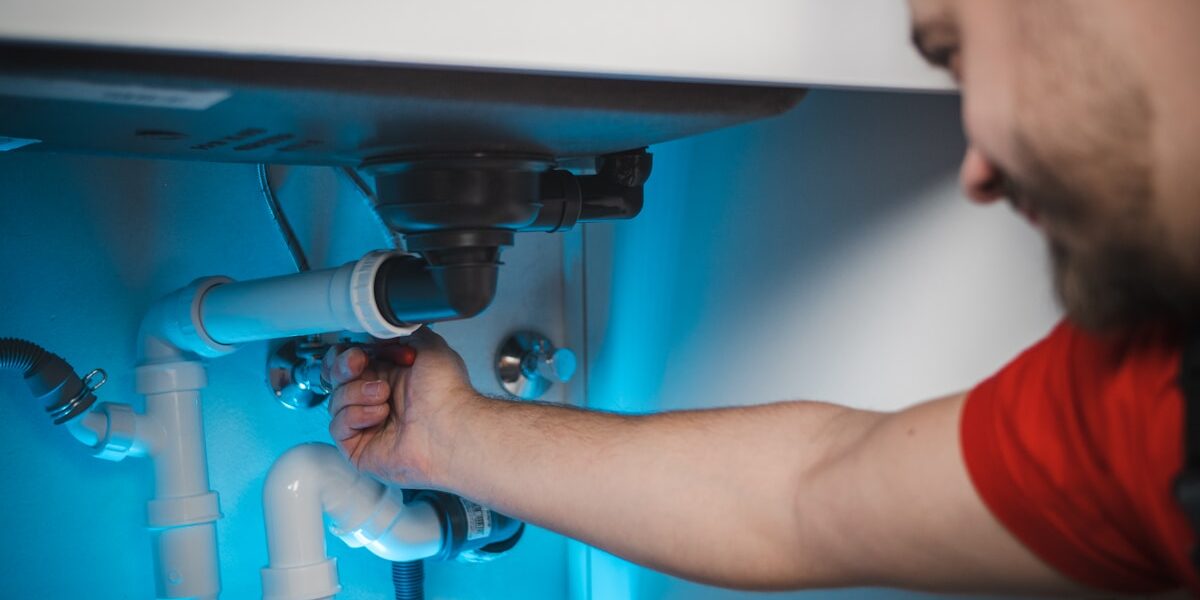
Neither PTFE thread-seal tape nor pipe-joint compound is universally “better.” Choose by the connection type, pipe and fitting materials, fluid or gas, temperature, pressure, product approvals, and the equipment manufacturer’s instructions. Tape is clean and immediately ready for many ordinary tapered water-pipe threads. A compatible paste can fill irregularities and lubricate assembly. Some manufacturers permit both together, but that is not a license to combine arbitrary products on every joint.
The first question is not tape versus paste. It is whether the connection needs thread sealant at all. These products are generally used on tapered pipe-thread joints such as NPT, where small paths remain between engaged threads. They do not belong on every threaded-looking connection.
Pipe thread sealant vs PTFE tape: quick decision table
| Situation | Starting point | What to verify |
|---|---|---|
| Small tapered water-pipe thread | Approved PTFE tape is often convenient | Pipe material, tape specification, wrap count, and fitting instructions |
| Larger or rough metal tapered threads | A compatible pipe-joint compound may fill thread voids more readily | Product size, pressure, temperature, and fluid ratings |
| Manufacturer permits tape plus compound | Tape first, then a thin compatible compound over it | Both labels and the component manufacturer must allow the combination |
| Plastic threaded fitting | Use only the method approved by the fitting manufacturer | Chemical compatibility and overtightening risk |
| Natural gas or propane | Use a specifically listed/rated method selected under local code | Gas type, listing, pressure, appliance instructions, permit, and required testing |
| Oxygen or strong oxidizer service | Do not improvise with ordinary tape or paste | Use only products and procedures specifically approved for that service |
| Compression, flare, gasket, or washer seal | Usually no thread sealant on the fastening threads | The seal is made at the ferrule, flare, gasket, or washer—not the threads |
What “Teflon tape” actually means
Plumber’s tape is more accurately called PTFE thread-seal tape. PTFE stands for polytetrafluoroethylene. “Teflon” is a brand name that people often use generically, so searches for Teflon tape and PTFE tape usually refer to the same type of thin thread-sealing film—not necessarily the same density, thickness, approval, or intended service.
Tape wraps around male tapered pipe threads. As the joint is assembled, it compresses into thread roots and also lubricates the connection. It has no liquid cure time, stays relatively clean, and is easy to carry. Those benefits do not make every roll interchangeable.
What pipe-joint compound is
Pipe-joint compound—also called thread-sealant paste or pipe dope—is brushed or applied to male pipe threads. Formulations vary widely. A compound may be approved for particular metals, plastics, potable water, natural gas, air, steam, chemicals, temperature ranges, and pressure limits. Another product with a similar-looking container may have completely different restrictions.
Paste can fill small thread imperfections and lubricate assembly. Some compounds remain soft; others set or cure. Never infer cure time, pressure readiness, or compatibility from the generic term “pipe dope.” Read the current label and technical data sheet for the exact container.
Connections that should not get ordinary thread sealant
Many plumbing connections use threads only to pull two sealing surfaces together. Adding tape to those fastening threads can prevent correct engagement, distort a component, or hide the real fault.
- Compression fittings: the ferrule or sleeve forms the seal.
- Flare fittings: mating flared surfaces form the seal.
- Garden-hose and supply-hose connections: a washer or gasket usually forms the seal.
- Union fittings: the union seat forms the seal.
- Push-to-connect fittings: an internal O-ring forms the seal.
- Soldered, brazed, solvent-welded, or press connections: use the specified joining method, not tape on unrelated threads.
If a fitting leaks, identify where its seal is designed to occur before adding material. Tape cannot repair a cracked fitting, damaged flare, missing washer, cut O-ring, cross-threading, or incompatible thread standard.
When PTFE tape is a practical choice
Tape is commonly useful on compatible, clean, tapered male pipe threads in ordinary plumbing service. It is quick, requires no drying period, and leaves less external residue than paste. Oatey’s current instructions describe starting back from the end, wrapping in the tightening direction, overlapping the tape, and pressing it into the threads before assembly.
Use the tape manufacturer’s specified number of wraps for its density and the connection. A thick high-density tape may need fewer wraps than a thin general-purpose roll. Too little can leave leak paths. Too much increases assembly stress and may prevent correct engagement.
When pipe-joint compound may be preferable
A listed, compatible compound can be useful on larger metal threads, fittings with minor surface irregularities, and services specifically covered by the product data sheet. It spreads into thread roots and can reduce galling or seizure in applications the manufacturer approves.
Do not use paste as a repair for severely damaged threads. If threads are cracked, cross-threaded, badly corroded, misshapen, or the wrong standard, replace or correct the parts. Sealant fills normal thread clearances; it does not restore mechanical integrity.
Can you use tape and paste together?
Sometimes. Oatey states that its pipe-joint compound can be applied over properly wrapped thread-seal tape. In that approved workflow, tape goes on the male threads first and a thin coating of compatible compound goes over the tape. Other manufacturers or equipment instructions may require one product only.
Combining products is not automatically safer. Extra lubrication can make overtightening easier, and excessive material can enter the system. Confirm that the tape, compound, pipe, fitting, carried substance, and equipment manufacturer all permit the combination.
How to apply PTFE thread-seal tape
- Shut down and make the system safe. Depressurize and drain it as required. Fuel-gas and hazardous systems belong with qualified professionals following code and test procedures.
- Confirm the joint type. Verify that it is a compatible tapered pipe-thread connection that calls for sealant.
- Inspect and clean. Remove old tape, compound, dirt, oil, rust, and debris without damaging threads. Replace defective parts.
- Start behind the leading thread. Oatey recommends leaving the first thread exposed so fragments do not enter the system.
- Wrap in the assembly direction. Viewed from the end of a typical right-hand male thread, that is clockwise. The tape should tighten rather than unravel as the fitting turns in.
- Use the product’s wrap guidance. Keep tension controlled, overlap consistently, and avoid a loose wad at the opening.
- Assemble to the component instructions. Do not use a generic turn count where the fitting or equipment manufacturer specifies engagement or torque.
- Test appropriately. Restore service using the required inspection and leak-test procedure.
How to apply thread-sealant paste
- Verify the exact compound is approved for the pipe, fitting, conveyed material, temperature, pressure, and regulatory requirements.
- Clean and inspect both threads.
- Mix or knead the product if its directions require it.
- Apply a thin, even coat to the male engagement area. Follow the label on whether to leave the leading thread bare.
- Keep compound out of the pipe bore, valves, regulators, burners, and instrument passages.
- Assemble without cross-threading and tighten to the component instructions.
- Observe any cure or wait time before pressurizing, then perform the specified leak test.
Material compatibility matters
PVC, CPVC, ABS, and other plastics
Plastic female fittings can split when overtightened, especially because tape and paste reduce friction. Some compounds are chemically incompatible with specific plastics. Use only the pipe or fitting manufacturer’s approved sealant and assembly method; do not rely on a label that merely says “plumbing.”
Brass, steel, and iron
Approved tape or compound may work on tapered metal threads, but pressure, temperature, fluid, corrosion, and disassembly needs still determine the product. Rusted or damaged threads should be corrected rather than buried in extra sealant.
Stainless steel
Stainless threaded connections can gall. Use the fitting manufacturer’s approved lubricant/sealant procedure and tightening guidance. Tape color alone does not establish suitability.
Do tape colors tell you what to use?
Manufacturers use colors to identify products, but color is not a complete specification. Oatey, for example, markets different colors for general plumbing, water, gas, and stainless-finish applications. Another brand’s density, thickness, listing, or intended use may differ. Read the roll, packaging, technical data, and applicable code instead of selecting by color alone.
Gas-line warning
Natural-gas and propane work has fire, explosion, carbon-monoxide, and code risks. A product must be specifically rated or listed for the exact fuel-gas service, and the connection must follow local code, permit rules, appliance instructions, and the required pressure/leak test. Do not use ordinary white water-service tape merely because it fits the threads. If you are not qualified and authorized for the work, use a licensed gas fitter or plumber.
Why a threaded joint still leaks
- The connection uses a gasket, flare, ferrule, or O-ring and the wrong area was sealed.
- The tape was wrapped backward and unraveled during assembly.
- Tape or paste covered the opening and contaminated a valve or orifice.
- The sealant is incompatible with the pipe, fitting, fluid, gas, temperature, or pressure.
- The threads are cross-threaded, cracked, corroded, mixed-standard, or mechanically damaged.
- The joint is under-engaged or overtightened.
- A paste was pressurized before its required wait or cure period.
- The apparent joint leak actually comes from a nearby valve stem, hose washer, solder joint, or cracked body.
Do not keep adding wraps or compound to a joint that repeatedly leaks. Disassemble it safely, identify the seal design, inspect the components, and replace defective parts.
For a broader remodel context, see our bathroom remodel planning guide. Where a leak has already caused staining or movement, diagnose and dry the assembly before closing the wall.
Thread-seal tape vs paste FAQ
Is PTFE tape the same as Teflon tape?
In common plumbing language, usually yes: people use “Teflon tape” for PTFE thread-seal tape. The exact roll’s thickness, density, listings, and service ratings still matter.
What can I use instead of Teflon tape?
A pipe-joint compound specifically approved for the connection may be an alternative. Some systems instead require a gasket, flare, ferrule, O-ring, anaerobic sealant, or manufacturer-specific method. Do not substitute before identifying the joint.
Should paste be applied liberally?
No generic rule says more is better. Excess can enter the system, contaminate components, and increase overtightening risk. Apply the amount and location specified by the exact product.
Does tape seal low pressure while paste handles high pressure?
That is too broad. Suitability comes from the product’s documented pressure, temperature, material, and service ratings plus the fitting instructions—not simply whether it is tape or paste.
Can tape fix damaged threads?
No. Replace cracked, cross-threaded, badly corroded, or mismatched components. Sealant is not a structural repair.
Manufacturer references
- Oatey: selecting and applying pipe-thread sealant
- Oatey: thread-seal tape application guide
- Oatey: using compound and tape on the same joint
- Swagelok: PTFE-free pipe-thread sealant instructions and limitations
This guide covers general identification and product selection. Follow the exact pipe, fitting, equipment, and sealant instructions plus local code. Use qualified professionals for fuel gas, hazardous media, concealed critical work, and required testing.




Stay in the loop
Get the latest northwest renovate updates delivered to your inbox.