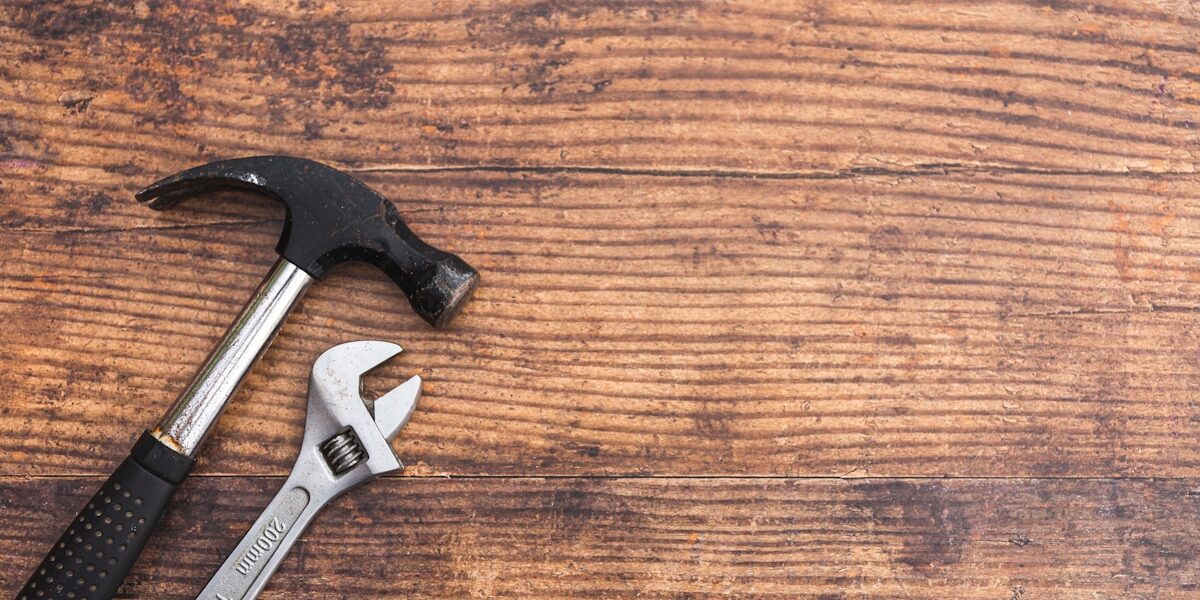
A milled-face hammer has a textured striking face—usually a crosshatch or waffle pattern—designed to reduce slipping when it contacts a nail head. Its main advantage is control during rough framing. Its main disadvantage is equally important: the pattern can stamp wood, trim, siding, decking, and other finished surfaces if the face misses the nail or drives the head below the surface.
That makes a milled face a task-specific choice, not an automatic upgrade over a smooth-face hammer. Use it where speed and nail contact matter and the work will be covered. Choose a smooth face where an accidental mark would remain visible.
Milled face versus smooth face
| Feature | Milled face | Smooth face |
|---|---|---|
| Surface | Crosshatched or waffle texture | Flat, polished or lightly finished surface |
| Main benefit | More bite on a nail head during rough work | Less likely to emboss exposed material |
| Typical work | Framing, sheathing and concealed rough carpentry | Trim, finish carpentry, siding and visible decking |
| Missed strike | Can leave a patterned dent | Can still dent material, but without the waffle imprint |
| Best user | Someone prioritizing nail contact on unfinished work | Someone working near visible surfaces or switching tasks frequently |
What the texture actually does
The raised pattern creates edges that can engage the nail head and make a glancing blow less likely than with a similarly shaped smooth face. It does not make the hammer more powerful, eliminate misses, or guarantee that a bent nail will drive straight. Driving force still depends on head mass, swing speed, handle length, strike alignment, nail type, and the material receiving the nail.
A milled face also does not reduce the physical effort of every blow. Choosing an overly heavy head can reduce control and increase fatigue. A controlled square strike with a suitable lighter hammer is usually better than forcing a heavy tool whose face rarely lands flat.
When a milled-face hammer helps
- Wall and roof framing: when lumber and fasteners will be concealed by later layers.
- Sheathing: when surface appearance is not part of the finished work.
- Temporary bracing and forms: where cosmetic impressions do not matter.
- Wet or dirty rough work: where a textured face may help maintain contact, while the handle and gloves still need to be clean and secure.
Even in framing, use the fastener and installation method specified by the plans, connector manufacturer, and applicable code. A framing hammer is not a substitute for an approved connector-nail installation method, and some structural connectors require particular nails and placement.
When to choose a smooth face
Use a smooth-face hammer around exposed trim, cabinets, flooring, furniture, prefinished siding, visible deck boards, cedar, painted surfaces, and finish nails. A smooth face can still crush fibers and leave a round dent, so protect the work and stop striking before the head is driven too deeply.
For delicate finish nails, a smaller finish hammer or nail set provides more control. For non-marring assembly, use a mallet with the material and hardness intended for the work. Do not use a claw hammer as a universal substitute for every striking tool.
Does a milled face damage nail heads?
The texture can leave marks on a nail head, but the larger practical concern is the surrounding work. Repeated off-center impacts can bend a nail or create unsafe deflection regardless of face pattern. Replace badly bent or damaged fasteners rather than continuing to strike them unpredictably.
Do not strike hardened tools, masonry chisels, punches, cold chisels, concrete, or other hard objects unless the hammer is specifically designed for that task. An ordinary framing hammer and the struck object can chip, creating flying fragments.
How to choose a framing hammer
Head weight
Heavier heads can deliver more momentum but demand more control. Common framing-hammer weights span roughly the high teens into the 20-ounce range and beyond, but there is no best number for everyone. Test whether you can swing accurately through a realistic work period without gripping excessively or losing face alignment.
Handle material
Steel one-piece hammers are durable but can transmit a different feel and vibration than wood or fiberglass. Wood handles can absorb shock and are replaceable on suitable heads but require inspection for damage and secure attachment. Fiberglass resists weather and can provide isolation, yet a damaged fiberglass handle should not be wrapped and returned to service. Comfort depends on the whole design, not the material label alone.
Handle length and balance
A longer handle can increase head speed and reach but may reduce control in confined spaces. Balance influences how quickly the face squares to the nail. Hold and swing the hammer safely before buying; published weight alone does not describe how it feels.
Claw style
A straighter rip claw suits prying and demolition more than a deeply curved nail-pulling claw. Neither is a pry bar. Excess sideways loading can damage the claw or handle and release material suddenly.
Magnetic nail starter
A magnetic groove can hold a nail for the first placement strike, reducing the need to keep fingers beside the head. It is useful for reach, but it does not replace stable footing, eye protection, or correct hand position.
Safe hammer inspection
Inspect the tool before use. Remove it from service if the head is loose, the handle is split or cracked, the grip slides, the claw is damaged, or the striking face is chipped, excessively worn, mushroomed, or contaminated. Do not repair structural damage with tape. Use the manufacturer’s approved replacement procedure and parts where repair is permitted.
Clean oil, adhesive, and moisture from the grip and face. A textured face covered with debris does not provide predictable contact and can mark the work. Keep the immediate work area clear of people and loose material.
Safer striking technique
- Wear impact-rated eye protection appropriate to flying-particle hazards.
- Use the correct nail and verify that the substrate is supported.
- Start the nail with controlled taps or a magnetic starter.
- Move the holding hand away before full swings.
- Keep your eyes on the nail head and strike with the face square.
- Let the hammer’s motion do the work rather than squeezing the handle rigidly.
- Stop if the nail bends, the work shifts, or the hammer is damaged.
NIOSH identifies nails, staples, wood chips, and metal fragments as eye-penetration hazards and recommends protective eyewear selected for the specific work. Ordinary prescription glasses are not automatically impact-rated safety glasses.
Can you smooth a milled hammer face?
Some users grind a worn or patterned face smooth, but removing material can alter face geometry, heat treatment, balance, and manufacturer coverage. A home-modified face may also retain sharp edges or become crowned unevenly. The safer choice for finish work is a purpose-built smooth-face hammer. Ask the manufacturer before modifying any striking tool.
Frequently asked questions
Is a waffle-face hammer the same as a milled-face hammer?
Usually. “Waffle face,” “checkered face,” and “milled face” commonly describe a textured striking surface. Pattern depth and shape vary by model.
Is a milled face better for beginners?
Not automatically. It may reduce slipping on the nail head, but it also makes missed strikes more visible. Beginners benefit most from a manageable head weight, good balance, controlled practice, secure work, and appropriate eye protection.
Should you use one for deck boards?
Generally choose a smooth face for visible decking because the waffle can emboss the board. Follow the decking manufacturer’s fastener and installation instructions; many systems use screws or concealed fasteners instead of face-driven nails.
Does the texture wear off?
It can wear with use. Replace a hammer whose face becomes chipped, damaged, or unable to contact fasteners predictably. Do not try to restore the pattern with an improvised cutting tool.
Bottom line: a milled-face hammer is useful for concealed rough framing because its texture helps grip nail heads. A smooth face is the more versatile choice when the surrounding material will remain visible. Choose by task, fit, and control—and inspect the hammer and wear appropriate eye protection every time.




Stay in the loop
Get the latest northwest renovate updates delivered to your inbox.